22 Jun 2026
Tracing Signal Pathways from End-User Queries to Backend Resolutions in Hybrid Cloud Repair Chains
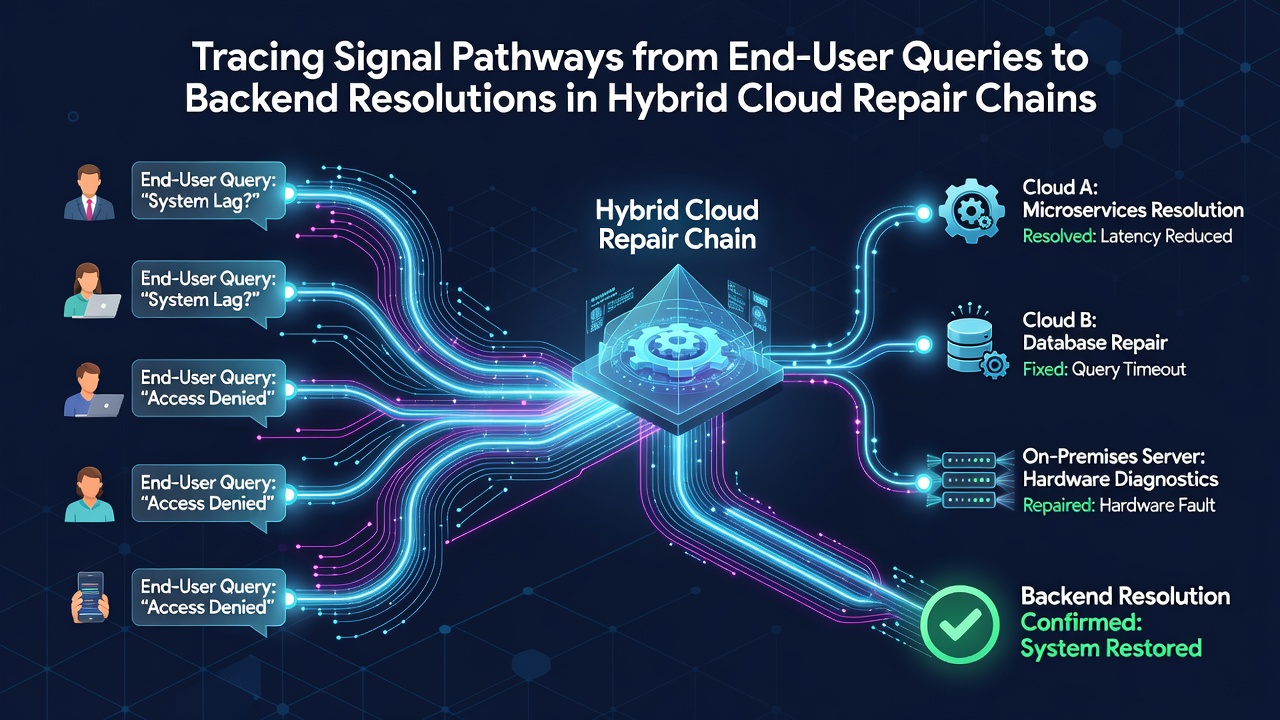
End-user queries in hybrid cloud environments travel through layered networks that combine on-premises infrastructure with public cloud resources, and researchers track these pathways to understand how initial signals reach backend resolution mechanisms. Data flows begin when a user submits a request via an interface, which then triggers authentication protocols before routing occurs across virtual private connections and public internet segments. Studies from organizations like the National Institute of Standards and Technology indicate that these pathways rely on standardized APIs to maintain consistency during transmission, while packet inspection tools monitor latency and packet loss at each hop.
Query Initiation and Initial Routing Layers
Users generate queries through applications or monitoring dashboards that capture details such as error codes, performance metrics, and device identifiers, and these elements get packaged into structured data packets for onward movement. Network segmentation plays a key role here because hybrid setups separate traffic between private clouds and public providers, which prevents congestion and allows priority queuing for repair-related signals. Observers note that by June 2026 many enterprise systems had incorporated edge computing nodes to preprocess queries closer to the source, reducing the distance signals travel before entering centralized orchestration layers.
Transmission Protocols and Security Integration
Protocols like HTTPS combined with message queuing services such as Apache Kafka handle the movement of query data across hybrid boundaries, and encryption standards ensure confidentiality during transit between on-site servers and remote cloud instances. Security checkpoints validate each packet against access policies before permitting further progression, which integrates with identity management systems to confirm user permissions. Research indicates that these checkpoints also log metadata for audit trails, enabling later reconstruction of the full signal path when issues arise in resolution stages.
Backend Processing and Automated Resolution Mechanisms
Once signals arrive at backend systems, orchestration platforms analyze the query content using rule-based engines and machine learning models that match patterns against historical repair data. Automated workflows then trigger actions such as resource scaling, service restarts, or ticket creation for human intervention when thresholds exceed predefined limits. Figures from industry reports show that hybrid environments achieve faster resolution times when diagnostic scripts execute directly on affected nodes rather than requiring full data round-trips to central servers.
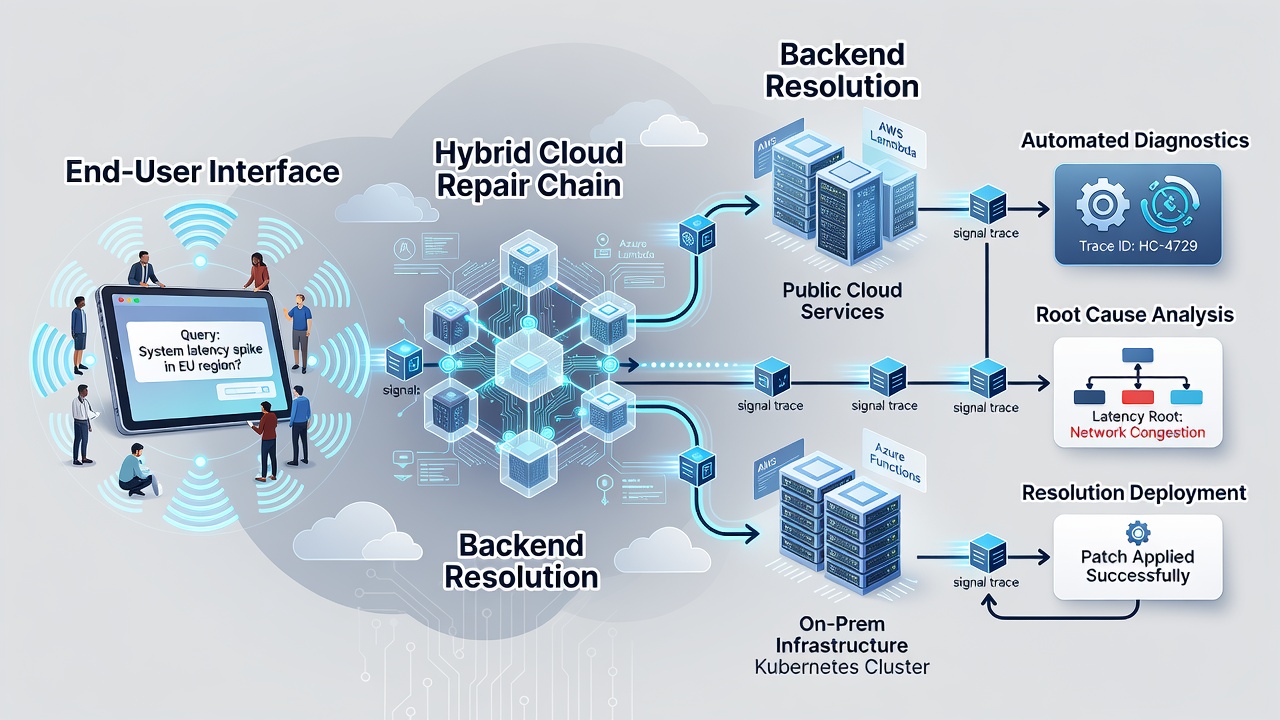
Load balancers distribute incoming signals across multiple resolution clusters to avoid bottlenecks, and containerized microservices handle specific tasks such as log aggregation or configuration validation. When a mismatch occurs between expected and actual states, the system escalates the query with enriched context including timestamps and prior resolution attempts. Those who manage these chains report that synchronization between private and public cloud telemetry feeds proves essential for maintaining an accurate view of system health throughout the process.
Monitoring, Feedback Loops, and Path Optimization
Continuous monitoring tools collect metrics on signal traversal times and success rates, which feed into analytics platforms that identify recurring bottlenecks in the repair chain. Feedback loops allow backend systems to adjust routing rules dynamically based on real-time performance data, and this adaptability supports environments where workloads shift between clouds according to demand. Data from academic studies at institutions such as those affiliated with the European Network and Information Security Agency reveal that optimized pathways reduce mean time to resolution by correlating query volume spikes with seasonal usage patterns.
Integration points between monitoring dashboards and repair automation further streamline the journey because alerts generated at intermediate nodes can initiate preemptive actions before signals reach the final backend stage. Traceability features built into modern hybrid platforms assign unique identifiers to each query, enabling administrators to follow the complete path from initiation through resolution without manual reconstruction of events.
Conclusion
Tracing signal pathways in hybrid cloud repair chains reveals a sequence of initiation, transmission, processing, and feedback stages that together determine how quickly end-user issues reach resolution. Standardized protocols, security integrations, and automated orchestration tools form the backbone of these flows, while monitoring and optimization techniques keep the system responsive to changing conditions. Organizations that map these pathways gain clearer visibility into their infrastructure, which supports more reliable maintenance across distributed environments.