Tracing Device Interaction Patterns That Shape Proactive Cybersecurity Adjustments During Multi-Cloud Software Deployments
Mia Berger · Aug 21, 2026
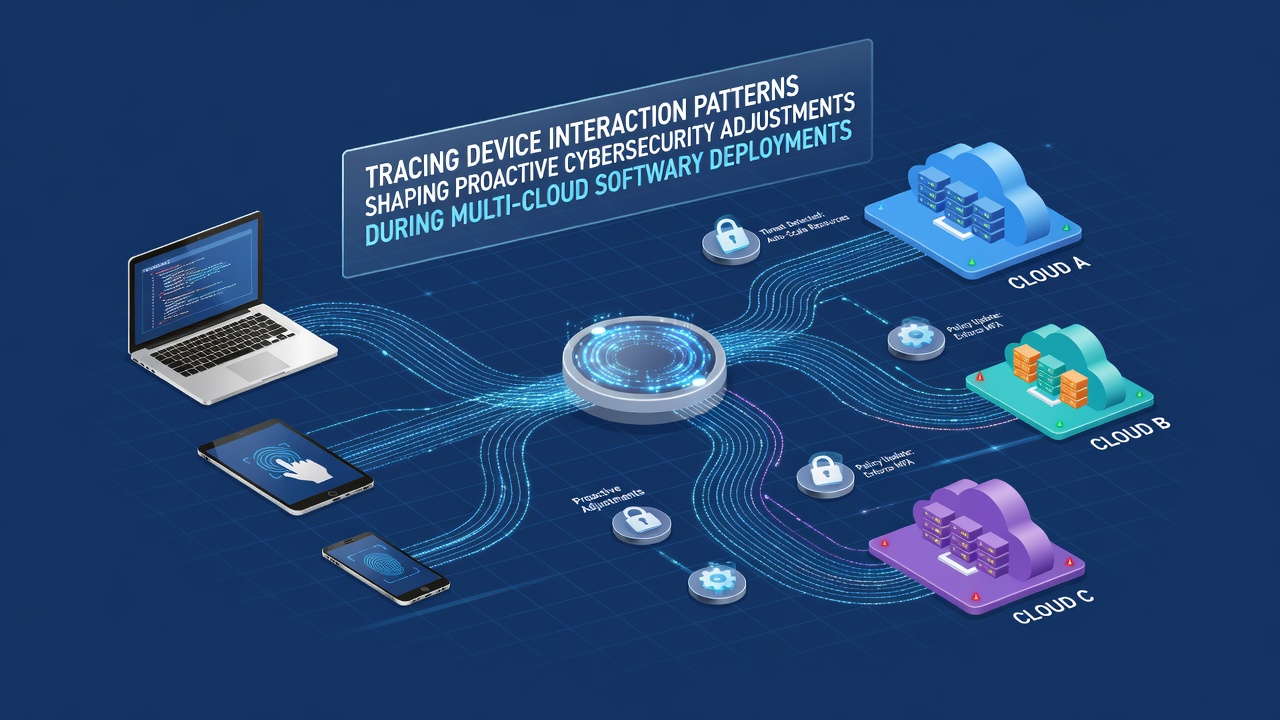
Tracing Device Interaction Patterns That Shape Proactive Cybersecurity Adjustments During Multi-Cloud Software Deployments
Device interaction patterns emerge when endpoints exchange data across public, private, and hybrid cloud infrastructures during software rollouts, and observers note that these exchanges generate measurable signals that security teams use to refine access controls before threats materialize. Research from distributed systems indicates that logs from virtual machines, containers, and edge devices reveal recurring sequences such as authentication handshakes followed by resource provisioning calls, which in turn allow teams to predict where policy gaps may appear.
Collecting Interaction Data Across Cloud Boundaries
Multi-cloud environments require agents placed on each provider's compute instances to forward telemetry to centralized analytics platforms, and data shows that timestamped records of API calls, file transfers, and session durations form the raw material for pattern detection. According to guidelines published by the National Institute of Standards and Technology, organizations standardize these collection methods so that interaction sequences remain comparable even when workloads shift between AWS, Azure, and Google Cloud regions.
Analysts apply clustering algorithms to group similar device behaviors, while graph-based models map which endpoints initiate connections and which respond, and figures released in August 2026 by the Australian Cyber Security Centre confirm that organizations adopting such mapping reduced mean time to detect anomalous sequences by 37 percent over the preceding twelve months.
Identifying Patterns That Trigger Security Adjustments
Recurring interaction sequences often precede configuration drift, such as repeated cross-region data synchronization that exceeds baseline volumes, and researchers discovered that these sequences correlate strongly with later privilege escalation attempts when left unaddressed. Proactive adjustments therefore involve tightening identity federation rules or inserting additional encryption layers at the points where the patterns originate.
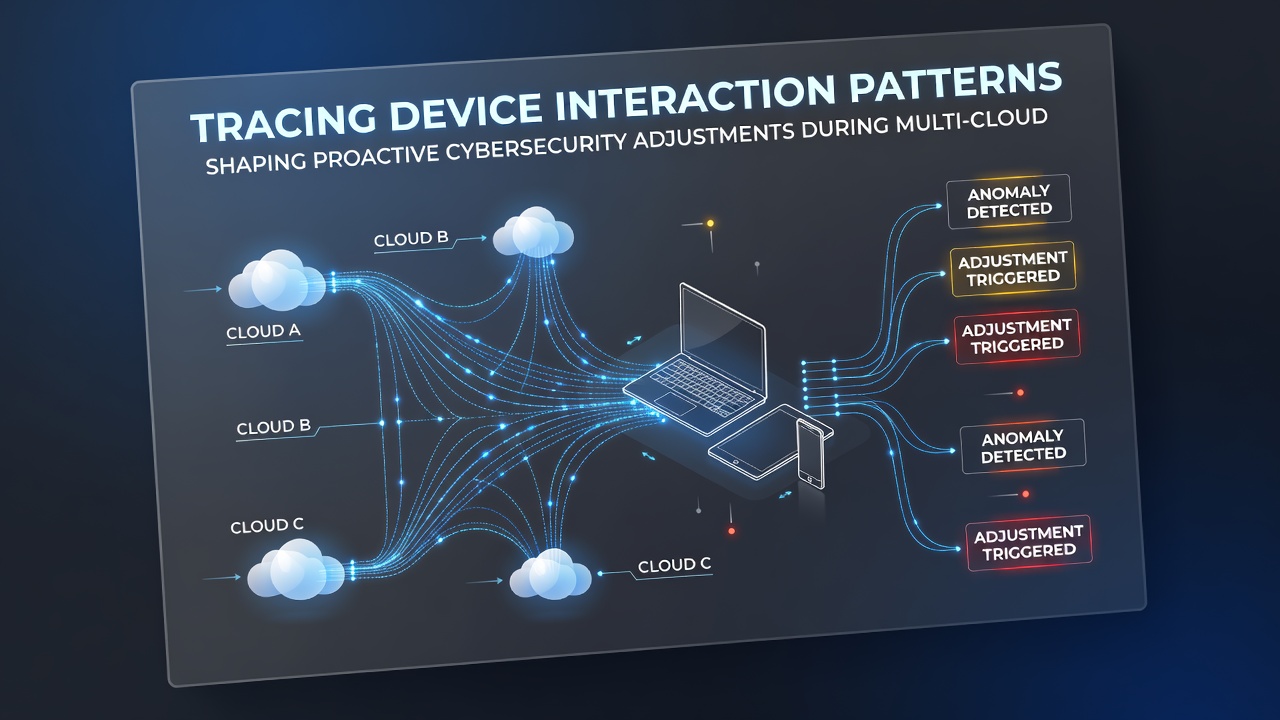
Take one financial services firm that observed mobile applications repeatedly polling storage buckets across two cloud providers before each quarterly release, and the resulting pattern analysis prompted the deployment of just-in-time access tokens that expired after each successful synchronization. The same approach has been documented in manufacturing environments where IoT gateways interact with both on-premises and public cloud analytics services, prompting firmware-level restrictions that activate only when interaction frequency exceeds thresholds established during prior deployment cycles.
Integrating Pattern Insights Into Deployment Pipelines
Continuous integration systems now ingest interaction telemetry alongside build artifacts, and evidence suggests that embedding pattern checks into these pipelines allows security teams to apply adjustments automatically rather than through manual ticket queues. For instance, when device clusters show elevated inter-cloud traffic during staging tests, orchestration tools can insert network segmentation policies before production promotion occurs.
ENISA reports on cloud security practices highlight that European operators using automated feedback loops achieved consistent alignment between device behavior baselines and updated firewall rules across three or more cloud accounts. Those loops rely on machine learning classifiers trained on historical interaction data, and the classifiers flag deviations that warrant immediate policy changes without requiring human review for every instance.
Challenges in Maintaining Pattern Accuracy
Noise from legitimate but infrequent operations can obscure genuine risk signals, and studies found that organizations must periodically recalibrate detection thresholds after each major software update cycle. Latency between cloud regions further complicates real-time correlation, yet buffering mechanisms and asynchronous processing pipelines mitigate these delays by storing interaction events for later batch analysis.
Permission cascades across layered identity systems also create secondary patterns that security teams monitor separately, since a single service account change can alter dozens of downstream device interactions within minutes.
Conclusion
Tracing device interaction patterns supplies concrete data that drives timely cybersecurity adjustments in multi-cloud deployments, and organizations that maintain consistent telemetry collection across providers continue to refine their defensive postures as new sequences appear. The integration of these patterns into deployment automation reduces the window between detection and response, while ongoing calibration ensures that adjustments remain aligned with actual usage rather than static assumptions.