Timing Software Deployments to Match Network Load Variations in Enterprise Settings
Mia Berger · Aug 24, 2026

Timing Software Deployments to Match Network Load Variations in Enterprise Settings
Enterprise networks experience predictable and unpredictable fluctuations in traffic that stem from daily business cycles, seasonal demands, and external events, and organizations that align software deployments with these patterns often reduce downtime while maintaining operational stability. Data from industry reports indicate that peak loads commonly occur during morning startup hours and end-of-quarter reporting periods, whereas troughs appear overnight and during holiday stretches, which creates windows for maintenance activities that minimize user impact.
Mapping Network Load Patterns Across Enterprise Environments
Network administrators track traffic metrics through centralized monitoring platforms that capture bandwidth usage, packet loss rates, and connection volumes at regular intervals, and these datasets reveal recurring rhythms tied to employee work schedules and application dependencies. Studies conducted by research institutions show that manufacturing firms typically see elevated loads between 8 a.m. and 4 p.m. local time, while financial services entities encounter spikes during market open and close periods across multiple time zones. Observers note that hybrid work arrangements introduced after 2020 have flattened some traditional peaks yet introduced new variability during evening remote access surges, which complicates scheduling decisions further.
August 2026 brought additional data points when several multinational corporations released anonymized traffic logs covering the preceding fiscal year, and analysts identified consistent 15 to 25 percent drops in utilization during the last week of each month across North American and European sites. These patterns align with payroll processing cycles and month-end financial closes that shift computational demands away from core network segments. Experts at academic centers have developed algorithms that correlate historical logs with external calendars, including public holidays in Canada and Australia, to forecast quieter intervals with greater accuracy than manual methods alone.
Deployment Scheduling Techniques That Align With Load Troughs
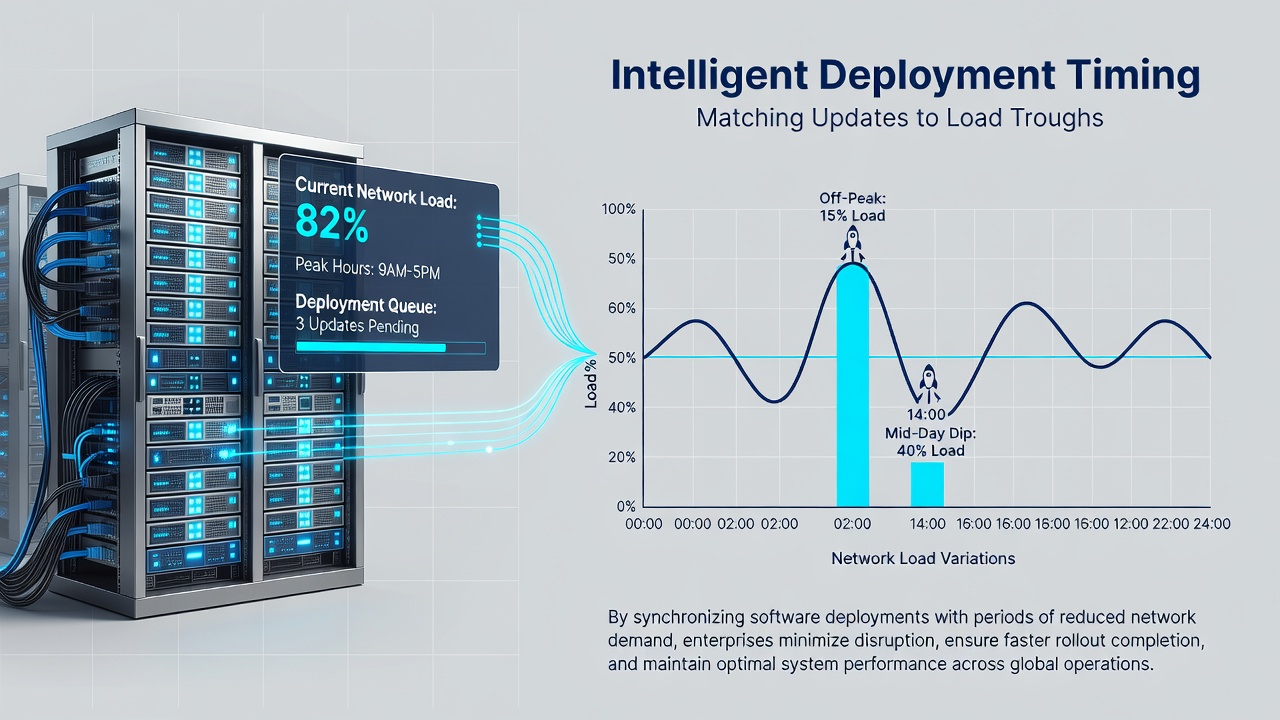
Teams coordinate release windows by integrating deployment orchestration tools with real-time analytics dashboards, which allows automated triggers to initiate updates only when utilization falls below predefined thresholds. This approach combines calendar-based planning with dynamic adjustments that respond to sudden drops caused by regional outages or weather-related closures. Research indicates that organizations using such hybrid methods complete 30 percent more deployments without service interruptions compared to fixed nightly schedules.
One case involved a retail enterprise that synchronized its point-of-sale software rollouts with overnight inventory reconciliation periods, and the result showed reduced rollback incidents because fewer active transactions competed for network resources during those hours. Another example comes from a logistics provider that leveraged satellite-dependent remote sites where seasonal user activity rhythms guided prioritized firmware alignments, allowing updates to proceed during periods of lower satellite bandwidth contention. Those responsible for these projects report that pre-deployment simulations run against historical load data help identify potential bottlenecks before live execution begins.
Tools and Data Sources That Support Precise Timing Decisions
Enterprise platforms often incorporate APIs from network monitoring suites that feed live metrics into scheduling engines, and these integrations enable continuous comparison of current conditions against baseline models. According to findings published by government technology agencies in the European Union, standardized reporting formats facilitate cross-border comparisons that help multinational teams select optimal deployment slots across different regulatory environments. Industry organizations focused on enterprise infrastructure have published benchmarks showing that predictive models trained on twelve months of traffic data achieve higher precision than shorter observation windows.
Academic researchers at institutions in the Asia-Pacific region have examined how machine learning models adjust for anomalies such as sudden marketing campaigns or supply chain disruptions, and their work demonstrates improved forecast reliability when external event data feeds into the same pipelines used for deployment planning. Organizations that adopt these layered approaches maintain detailed audit trails that support compliance requirements while allowing rapid adaptation to emerging load conditions.
Challenges in Coordinating Deployments Across Distributed Systems
Multi-site enterprises face additional complexity when time zone differences create overlapping high-load periods that shrink available maintenance windows, and legacy applications with rigid dependencies further constrain flexibility. Data synchronization methods must remain active during updates to prevent version conflicts, which adds overhead that teams account for when calculating safe deployment durations. Reports from regulatory bodies in the United States emphasize the importance of documenting decision criteria used for timing choices to support post-incident reviews.
Peripheral device calibrations sometimes require simultaneous software updates, and mismatches in rollout timelines have led to temporary service degradations in virtual environments where resource contention spikes unexpectedly. Those managing such scenarios often maintain buffer periods between successive deployment phases to allow stabilization monitoring before proceeding to the next segment.
Conclusion
Effective timing of software deployments depends on continuous observation of network load variations, integration of predictive analytics, and coordination across technical and operational teams, and organizations that invest in these capabilities record fewer disruptions during update cycles. Evidence from multiple regions continues to guide refinements in scheduling practices that balance business continuity with the need for timely system improvements.