Tech Consulting Aligns Cloud Resources and Web Development Cycles to Strengthen Data Backup Across Organizations
Ines Beck · Aug 7, 2026
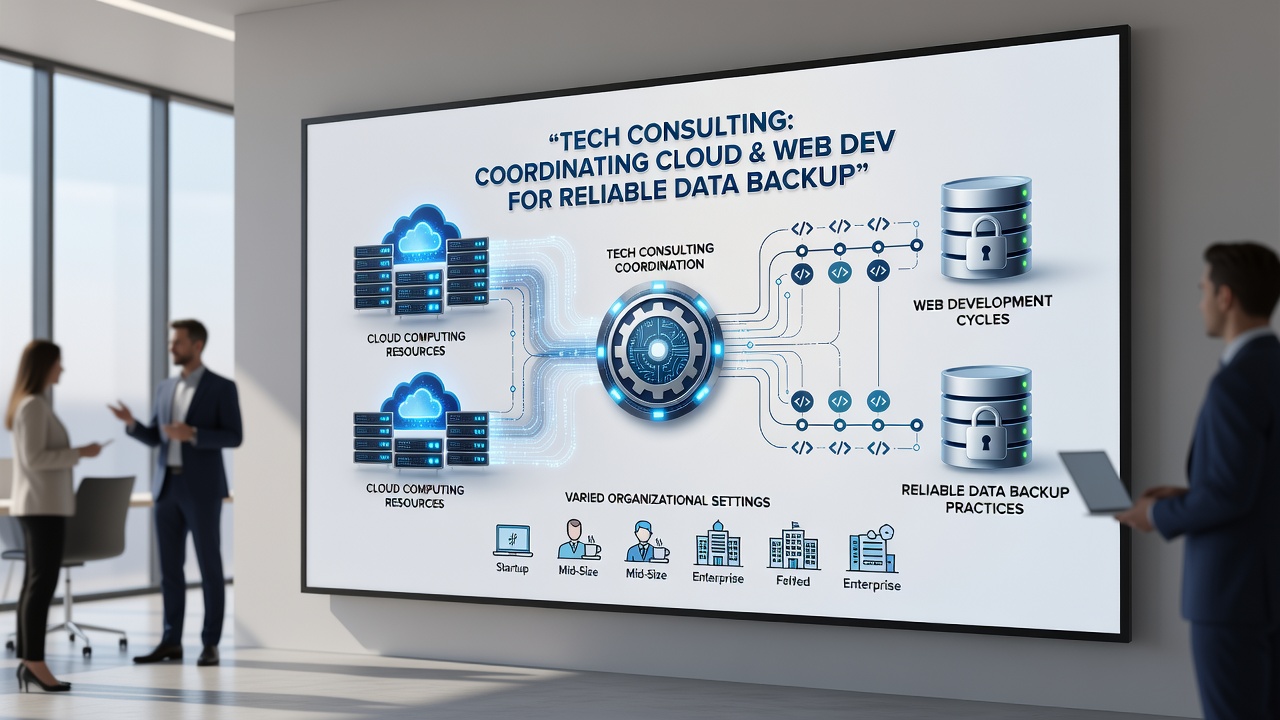
Tech Consulting Aligns Cloud Resources and Web Development Cycles to Strengthen Data Backup Across Organizations
Tech consulting firms coordinate cloud computing resources with web development cycles so organizations can maintain reliable data backup practices in settings that range from small enterprises to large distributed networks. These consultants map out how cloud storage services connect to development timelines and then embed backup protocols directly into those workflows rather than treating them as separate tasks.Integration of Cloud Infrastructure and Development Timelines
Consultants begin by assessing current cloud platforms and the sprint schedules used in web projects then identify points where data synchronization can occur without disrupting code deployments. They set up automated triggers that capture database states and file versions at the end of each development phase so backups reflect the latest stable builds. Research from the National Institute of Standards and Technology shows that organizations following structured synchronization methods reduce recovery time by aligning backup points with code release milestones.
Teams often discover that web applications generate large volumes of transient data during testing phases and consultants design filters to exclude temporary files while preserving user-generated content and configuration records. This selective approach keeps cloud storage costs predictable while ensuring critical assets remain protected across multiple availability zones.
Backup Protocols Tailored to Organizational Structures
In healthcare networks consultants adjust backup frequency to match regulatory requirements for patient records whereas manufacturing firms receive protocols that emphasize version history for production control systems. The process includes regular audits that verify both local and cloud copies remain intact and accessible. Data from the European Union Agency for Cybersecurity indicates that cross-checked backup routines lower incident impact when organizations operate across hybrid environments.

Consultants also establish role-based access so developers can initiate on-demand snapshots during critical feature merges while compliance officers retain oversight of retention policies. This layered permission structure prevents accidental overwrites and maintains an auditable trail that satisfies internal governance standards.
Practical Coordination Methods in Varied Settings
One mid-sized retailer worked with consultants to embed backup checkpoints into its e-commerce platform update cycle and the result was consistent nightly copies stored in geographically separate cloud regions. Another example involves a university IT department that synchronized research database backups with semester-end web portal refreshes so historical data remained available even after major site redesigns. Observers note these patterns repeat across education, finance, and logistics sectors where consultants translate unique operational rhythms into repeatable technical procedures.
Automation scripts handle most routine transfers while consultants monitor performance metrics and adjust thresholds when traffic spikes occur during seasonal campaigns or product launches. They also incorporate encryption standards at rest and in transit so backups meet data protection expectations without slowing development velocity.
Scaling Practices for Future Growth
As organizations expand their web presence consultants refine scaling rules that allocate additional cloud storage in proportion to new user features and database growth. They test failover scenarios during scheduled maintenance windows so teams understand recovery sequences before any real disruption arises. Projections through August 2026 suggest continued emphasis on these integrated approaches as more enterprises adopt multi-cloud strategies and require consistent backup orchestration across providers.
Conclusion
Tech consulting therefore functions as the connective tissue that links cloud capacity planning with web development pacing and produces backup systems capable of supporting diverse organizational needs. The methods rely on clear mapping of technical dependencies, scheduled verification steps, and adaptive policies that evolve alongside both infrastructure and application changes. Organizations that adopt these coordinated frameworks gain measurable improvements in data availability and recovery readiness.