12 Jun 2026
Synchronizing peripheral device calibrations with distributed software rollout timelines across enterprise virtual environments
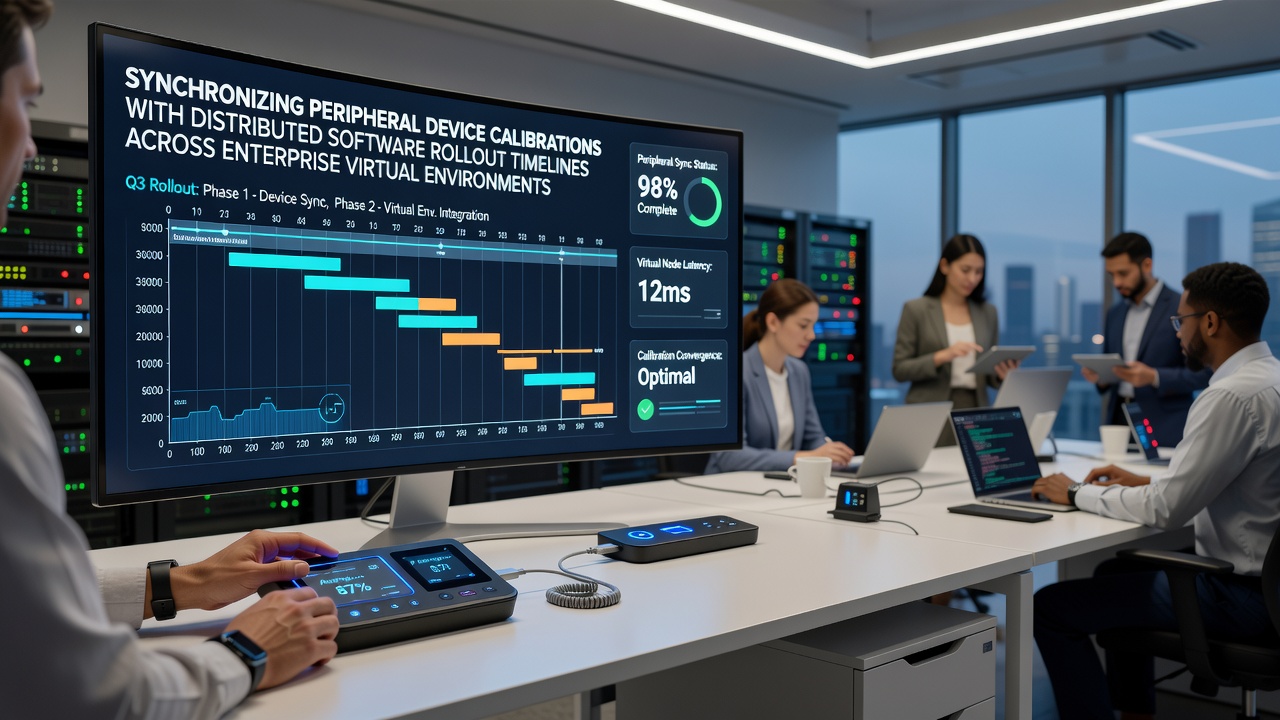
Enterprise IT teams coordinate peripheral device calibrations with software rollout schedules to maintain operational stability across virtualized infrastructures, and this synchronization reduces conflicts that arise when calibration routines overlap with update deployments in distributed environments.
Understanding the Core Components
Peripheral devices such as monitors, scanners, and specialized input hardware require periodic calibration to preserve accuracy, while distributed software rollouts involve phased updates to operating systems, applications, and virtual machine images across multiple sites. Observers note that misalignment between these processes leads to performance degradation because calibration data becomes invalid after certain software changes alter driver interactions or virtual hardware mappings.
Virtual environments add layers of abstraction where hypervisors manage resource allocation, and device emulation layers translate physical signals into virtual representations. Research from institutions like the National Institute of Standards and Technology indicates that calibration sequences must account for these layers to avoid drift in measurement outputs following patch installations.
Challenges in Timing and Coordination
Distributed rollouts follow staggered timelines across regions to minimize downtime, yet peripheral calibrations often depend on local device availability and environmental factors such as temperature fluctuations that affect sensor readings. Those who manage hybrid setups report that virtual machine migrations during rollout windows can reset device states, which invalidates prior calibration certificates unless systems include automated re-verification triggers.
June 2026 marks the scheduled release of updated virtualization standards from the European Union Agency for Cybersecurity that emphasize integrated timing protocols for device maintenance and software deployment cycles. Organizations preparing for these standards examine their current workflows to align calibration intervals with rollout phases using centralized orchestration tools.
Methods for Effective Synchronization
IT departments implement scheduling frameworks that map device calibration events onto rollout Gantt charts, and these frameworks incorporate dependency checks that pause updates when calibration conflicts appear. Data synchronization methods allow calibration logs from end devices to feed into central platforms, where algorithms detect mismatches between expected and actual device performance post-update.

One approach involves embedding calibration scripts within virtual appliance templates so that new software instances trigger device checks automatically upon first boot in the updated environment. Another method uses event-driven automation where software deployment completion events notify calibration management systems to initiate targeted routines on affected peripherals.
Role of Monitoring and Feedback Loops
Continuous monitoring systems track both software version states and calibration status across virtual clusters, and feedback loops relay discrepancies back to orchestration engines for immediate adjustment. Studies conducted at various research universities reveal that environments employing such loops experience fewer instances of calibration failure after major rollouts compared to those relying on manual coordination.
Permission cascades within update chains affect calibration access rights, because layered controls can restrict device interfaces during active deployment phases. Administrators therefore configure exception rules that grant temporary calibration privileges without compromising broader security policies.
Case Examples from Enterprise Deployments
Take one financial services firm that aligned printer calibrations with quarterly virtual desktop infrastructure updates by running pre-rollout simulations in isolated test clusters. The simulations identified driver incompatibilities early, allowing teams to adjust timelines before production impact occurred.
There's this case where a healthcare network synchronized scanner calibrations across multiple virtualized imaging stations during a phased electronic health record migration. By tying calibration windows to specific rollout milestones and using centralized dashboards, the organization maintained regulatory compliance while completing the transition without extended service interruptions.
Future Considerations and Emerging Practices
Emerging practices incorporate machine learning models that predict optimal calibration windows based on historical rollout data and device telemetry patterns. These models factor in variables such as virtual network latency and peripheral firmware versions to refine synchronization accuracy over successive cycles.
According to reports from the Australian Cyber Security Centre, enterprises adopting predictive approaches reduce manual intervention requirements while maintaining consistent device performance metrics across geographically dispersed virtual infrastructures.
Conclusion
Synchronization of peripheral device calibrations with distributed software rollout timelines supports reliable operations in enterprise virtual environments through structured planning, automated triggers, and integrated monitoring. Organizations that embed these practices into their workflows position themselves to handle evolving virtualization standards and maintain device integrity throughout update cycles.