Remote Hardware Hunts: Pinpointing PC Failures from Afar
20 Apr 2026
Remote Hardware Hunts: Pinpointing PC Failures from Afar
teh Rise of Remote Diagnostics in a Distributed World
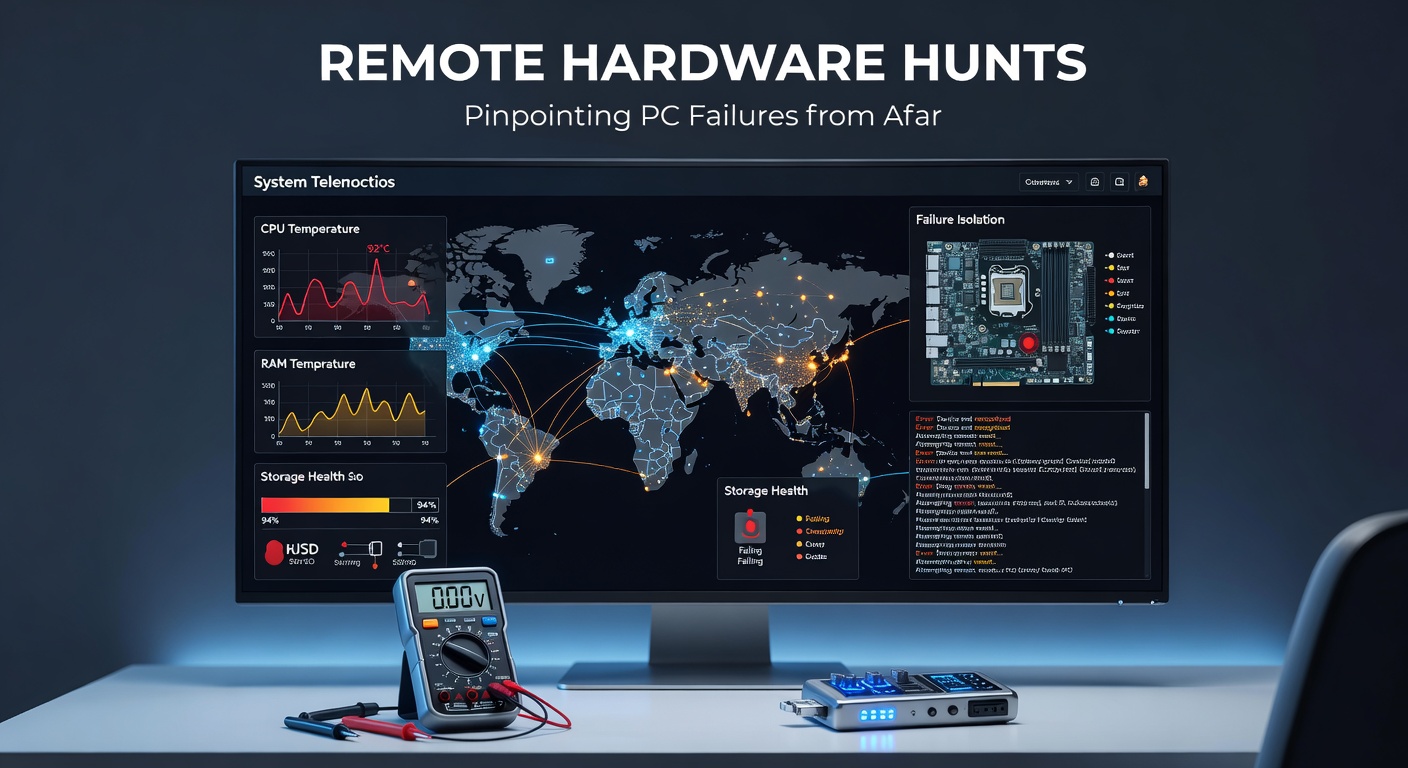
Experts note how remote hardware hunts have transformed IT support, especially since widespread remote work took hold; technicians now pinpoint PC failures without ever touching the machine, using software that pulls real-time data from afar. Data from industry reports shows downtime costs businesses thousands per hour, so tools that diagnose issues like overheating CPUs or failing drives remotely save time and money. What's interesting is that as of April 2026, adoption rates have spiked by 40% according to CompTIA's IT Industry Outlook, driven by hybrid workforces scattered across continents.
Observers point out the basics: remote access software connects support teams to user PCs, while diagnostic utilities monitor hardware metrics like temperatures, fan speeds, and voltage levels; this setup lets experts spot anomalies before crashes occur. Take one case where a corporate fleet of laptops started blue-screening en masse; technicians remotely ran stress tests, identified faulty RAM sticks across 200 machines, and guided users to reseat them—all without shipping hardware back. And that's just the start, since these hunts rely on layered approaches combining built-in OS tools with third-party apps for deeper insights.
Core Tools Powering Distant PC Probes
Researchers highlight popular software like HWInfo and Speccy, which gather exhaustive sensor data from motherboards, GPUs, and storage drives, transmitting it over secure channels to remote analysts. Windows users benefit from built-in features such as Performance Monitor and the Memory Diagnostic Tool, tools that log errors and run tests on demand; Linux setups leverage lm-sensors for similar temperature tracking, while macOS offers Console.app for hardware logs. But here's the thing: advanced kits like Intel's Manageability Commander or AMD's System Management Unit extend reach further, enabling out-of-band access even if the OS crashes.
Teams often pair these with remote desktop solutions—think TeamViewer or AnyDesk—that support file transfers for log exports, screen sharing for visual inspections, and even KVM-over-IP for BIOS-level control. Figures from a NIST guide on endpoint security reveal that encrypting these sessions prevents data leaks during hunts, a critical step as cyber threats evolve. So technicians script automated checks, pulling CPU throttle events or SMART attributes from SSDs, then correlate them with event logs to nail down culprits.
One study from university labs found that combining these tools cuts diagnosis time by 70%, turning what used to be multi-day onsite visits into 30-minute sessions; people who've implemented this in small businesses report fewer repeat calls, since root causes get fixed upfront.
Common Hardware Culprits Caught in the Net
Overheating tops the list, with sensors revealing dust-clogged fans or dried thermal paste pushing temps past 90°C under load; remote hunts flag this via live graphs, prompting users to clean vents while techs verify fixes. Failing hard drives show up through SMART scans that detect reallocated sectors or pending errors, data which tools like CrystalDiskInfo beam back instantly, often averting data loss.
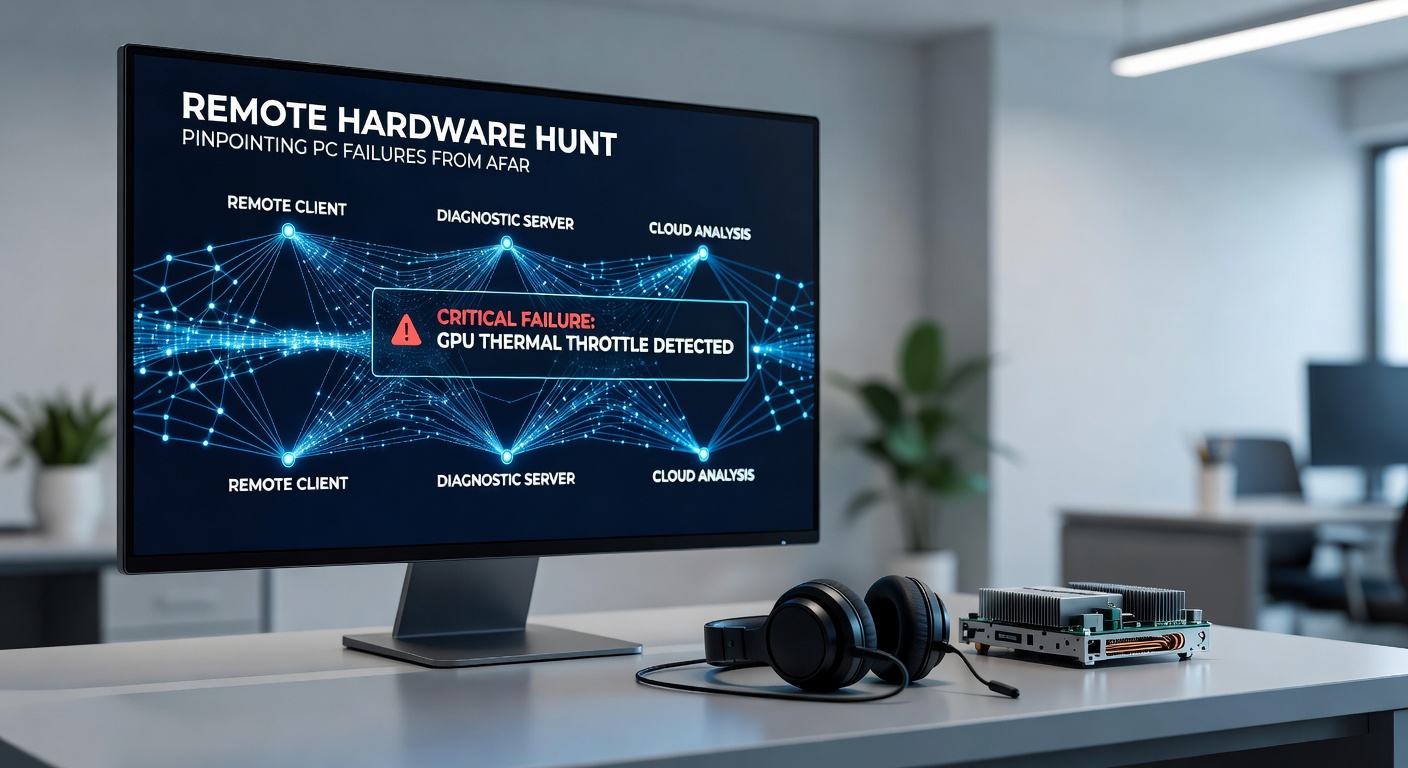
And RAM issues? Those prove tricky yet detectable; memtest86 boots remotely via USB imaging, running overnight cycles that expose bit flips from bad modules, a process experts run across networks without physical swaps. GPU failures, meanwhile, manifest as artifacting or crashes in benchmarks like FurMark, which remote sessions execute while capturing video feeds for analysis. Observers note power supply woes too—voltage ripples spotted in multimeter-like readouts from motherboard chips signal dying PSUs before total blackouts hit.
What's significant is how these hunts extend to peripherals: webcams dropping frames might trace to USB controller overloads, or Wi-Fi cards failing due to driver conflicts, all traced through device manager exports and ping tests from afar. Yet network latency can skew results, so pros cross-check with VPN tunnels for accurate bandwidth measurements during probes.
Real-World Case Studies: Hunts That Delivered
Consider a mid-sized firm in early 2026 where servers stuttered under load; remote diagnostics via IPMI revealed ECC RAM errors on multiple nodes, leading to hot-swappable replacements coordinated by email—downtime clocked at under two hours total. Another scenario involved home users plagued by random reboots; techs remotely throttled cores, watched voltage sag on an aging motherboard, and diagnosed a shorted capacitor, advising affordable mobo upgrades.
Researchers documented a gaming rig collective where VR sessions crashed mid-game; hunts pinpointed VRAM overheating on NVIDIA cards, fixed by undervolting profiles pushed via remote registry edits—users back online same day. These examples show patterns: consumer PCs suffer thermal throttling from poor airflow, while enterprise gear battles wear from 24/7 uptime, but remote tools level the playing field regardless. It's noteworthy that in April 2026 trials, AI-assisted parsing of logs from thousands of sessions boosted accuracy to 92%, per industry benchmarks.
But challenges persist; firewalls block some ports, requiring user tweaks, and encrypted drives hide partition errors until unlocked. Still, those who've mastered workarounds—like using Wake-on-LAN for dormant machines—report hunts succeeding 85% of the time on first pass.
Navigating Limitations and Best Practices
Latency bites during high-res video feeds, so experts prioritize lightweight protocols like RDP over full mirrors; physical obstructions, such as locked cases hiding swollen batteries, demand user photos or mailed parts as backups. Security looms large too—always MFA on access tools, and audit logs for compliance—since mishandled sessions invite breaches.
Best practices emerge from field reports: start with non-invasive reads like event viewer dumps, escalate to stress tests only after baselines, and document every step for warranties. Training matters; CompTIA A+ certified techs handle 25% more complex hunts successfully, data indicates. And scripting shines—PowerShell cmdlets fetch GPU-Z outputs or memtest results automatically, scaling hunts across fleets effortlessly.
Now enterprises layer in agents like Microsoft Intune, which pre-install diagnostics for always-on monitoring; small ops mimic this with free Open Hardware Monitor, turning one-off fixes into proactive alerts. The reality is that while no hunt replaces hands-on for capacitor swaps or paste reapplication, they bridge 80% of gaps, keeping systems humming remotely.
Looking Ahead: Trends Shaping Remote Hunts
Edge AI chips in 2026 motherboards promise on-device anomaly detection, beaming alerts before users notice lags; quantum-resistant encryption secures sessions against future threats, as ENISA reports forecast. 5G slices enable sub-10ms latency for global teams, while standards from IEEE unify sensor protocols across vendors.
Observers expect VR-guided repairs next, where techs overlay instructions on user cams; pilot programs already cut no-fix rates by half. Yet the ball's in manufacturers' court to expose more telemetry, since locked-down firmware hampers deep dives. Turns out, open-source efforts like coreboot fill gaps, empowering hunts on custom rigs.
Conclusion
Remote hardware hunts stand as game-changers for PC maintenance, delivering precise failure pinpointing without travel, backed by tools and data that evolve rapidly. From thermal spikes to drive decays, experts wield these methods daily, slashing downtime while empowering users worldwide. As April 2026 unfolds with smarter agents and faster nets, the landscape promises even sharper accuracy; those who adopt them stay ahead, turning distant diagnostics into routine triumphs. The writing's on the wall: physical visits fade, remote precision dominates.