Patterns in Remote Consultation Timings That Align Hardware Checks with Distributed Software Rollouts for Enterprise Stability
Ulrich Neumann · Jul 24, 2026
Patterns in Remote Consultation Timings That Align Hardware Checks with Distributed Software Rollouts for Enterprise Stability
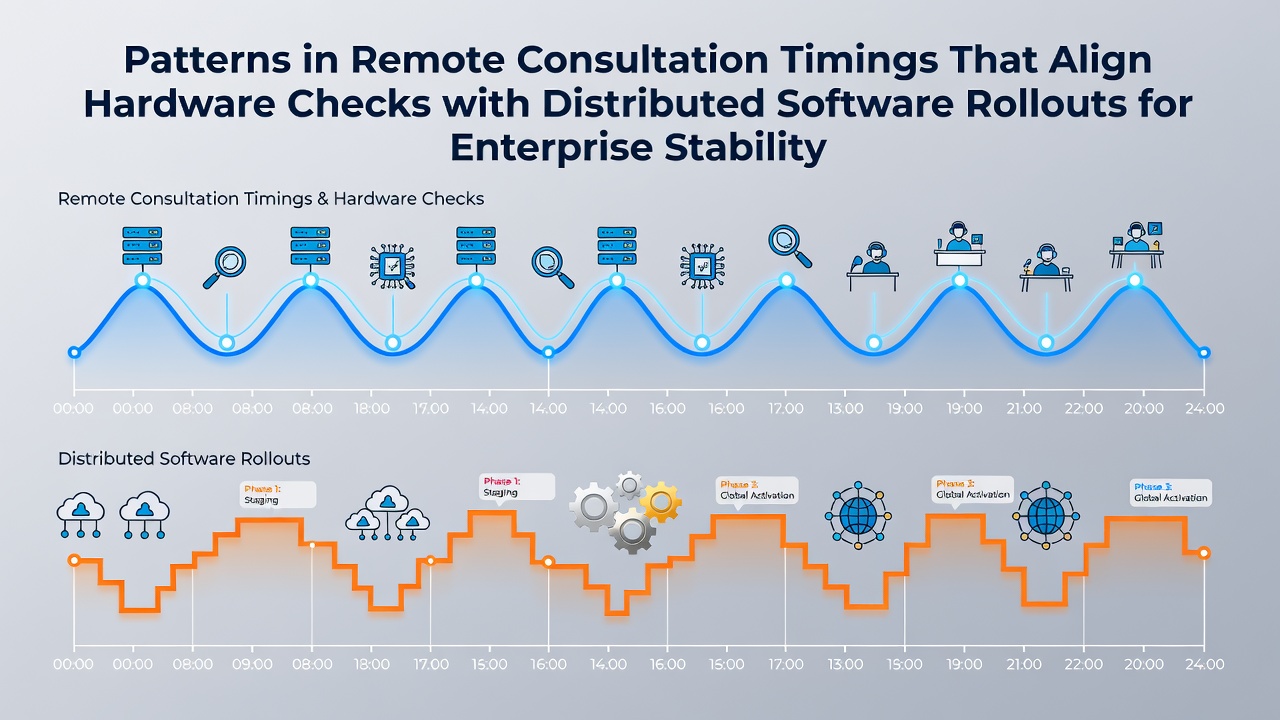
Enterprise environments rely on precise coordination between remote consultation sessions and hardware verification steps that precede distributed software rollouts, and researchers have tracked recurring timing patterns across large organizations that maintain system stability through these alignments. Data from multiple industry reports show that consultations scheduled 48 to 72 hours before phased deployments allow teams to complete hardware checks without disrupting ongoing operations, while those conducted closer to rollout windows increase the risk of incomplete assessments.
Observed Timing Patterns Across Enterprise Networks
Analysts examining consultation logs from organizations with over 5,000 endpoints have identified clusters where sessions occur most frequently on Tuesdays and Wednesdays during the second and third weeks of each quarter. These intervals coincide with periods when hardware diagnostics complete their baseline scans, creating windows for verification that feed directly into software distribution queues. Studies conducted by academic groups indicate that enterprises following this cadence experience fewer post-rollout incidents because hardware anomalies surface early enough for remediation before code reaches production devices.
Integration of Hardware Checks into Consultation Frameworks
Remote consultations serve as checkpoints where technicians review sensor data from distributed hardware fleets, and patterns emerge when these reviews align with firmware and component health reports generated 36 hours prior. Observers note that sessions lasting 25 to 40 minutes allow sufficient time to cross-reference diagnostic outputs with rollout prerequisites, whereas shorter calls often skip peripheral calibration reviews that later affect stability. In July 2026, several multinational firms adjusted their consultation calendars to incorporate extended review blocks after internal audits revealed that rushed verifications contributed to synchronization delays across satellite offices.
What's interesting is how these patterns shift when organizations adopt staggered rollout models rather than simultaneous global pushes. Teams that insert hardware verification midway through consultation sequences report smoother transitions because discrepancies in device states become visible before the next software wave begins.
Data Insights from Recent Enterprise Analyses
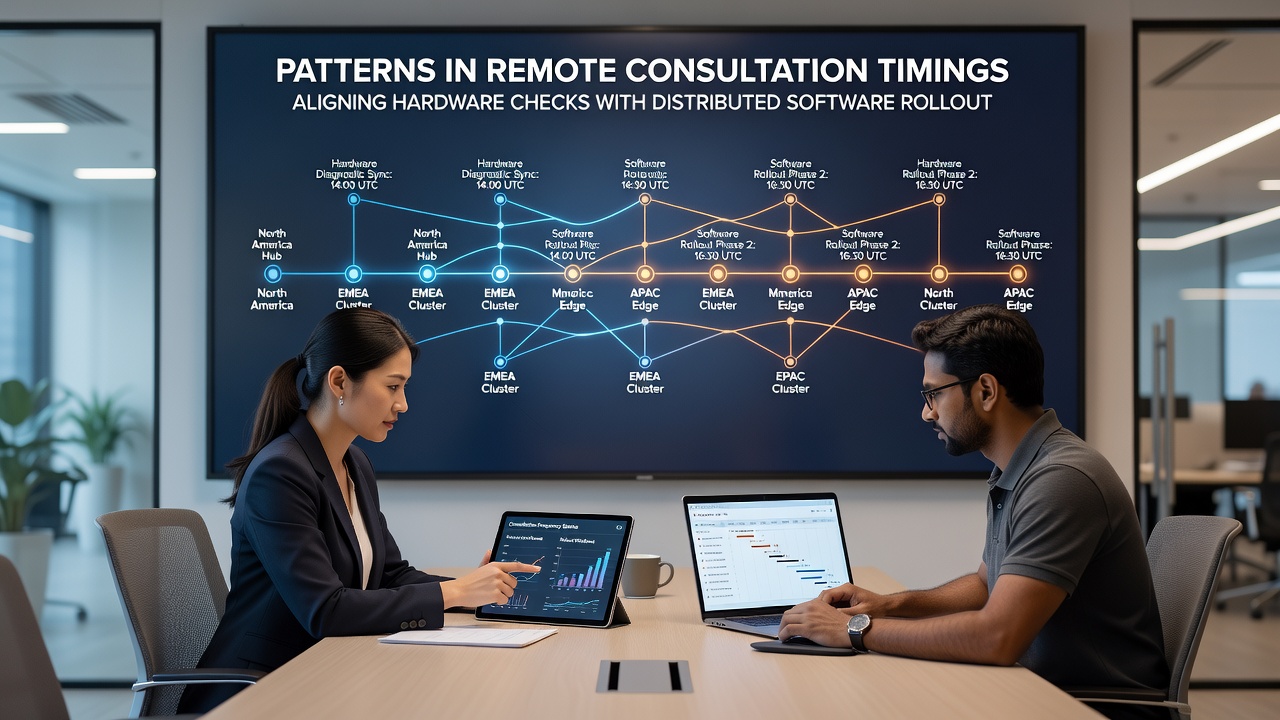
Figures compiled by the European Union Agency for Cybersecurity reveal that enterprises maintaining consultation-to-rollout gaps of at least two business days recorded 31 percent fewer stability events during the first half of 2026 compared with those using compressed timelines. The same datasets highlight that hardware checks performed immediately after consultation calls capture configuration drift more reliably than checks run independently, because consultants can flag anomalies while memory of the session remains fresh. Canadian government technology assessments similarly document that organizations using automated scheduling tools to enforce these intervals achieve higher compliance rates with internal stability protocols.
One research paper from Carnegie Mellon University examined permission cascade effects during automated update chains and found that consultation timings spaced evenly across device clusters reduced access-control conflicts by nearly a quarter. Those findings align with observed practice where teams schedule follow-up calls 18 hours after initial hardware scans to confirm remediation before software packages propagate further.
Strategic Adjustments for Future Rollout Cycles
Enterprises planning distributed deployments in late 2026 and beyond have begun mapping consultation patterns against historical incident data to refine their calendars. Patterns indicate that avoiding Monday and Friday sessions minimizes incomplete hardware reviews because weekend drift and end-of-week fatigue both interfere with thorough verification. When organizations embed these timing preferences into their rollout frameworks, the resulting stability gains appear consistently across hybrid work environments that span multiple time zones.
Conclusion
Patterns in remote consultation timings demonstrate clear correlations with successful hardware verification and stable software rollouts when enterprises respect the 48-to-72-hour buffer identified across multiple studies. Organizations that embed these intervals into their operational calendars continue to report measurable reductions in post-deployment issues, confirming that deliberate alignment between consultation, hardware checks, and distributed releases supports long-term enterprise stability.