Mapping Usage Rhythm Effects on Firmware Alignment Priorities Within Satellite-Connected Device Networks
Ulrich Neumann · Jul 29, 2026

Mapping Usage Rhythm Effects on Firmware Alignment Priorities Within Satellite-Connected Device Networks
Device networks that rely on satellite links display distinct usage rhythms shaped by geographic location, time zones, and operational demands, and these patterns directly influence how firmware updates receive priority during alignment processes. Observers note that peak activity periods often coincide with data transmission windows, which forces network managers to sequence firmware changes around those intervals to maintain connectivity stability across remote clusters.
Understanding Usage Rhythms in Satellite Environments
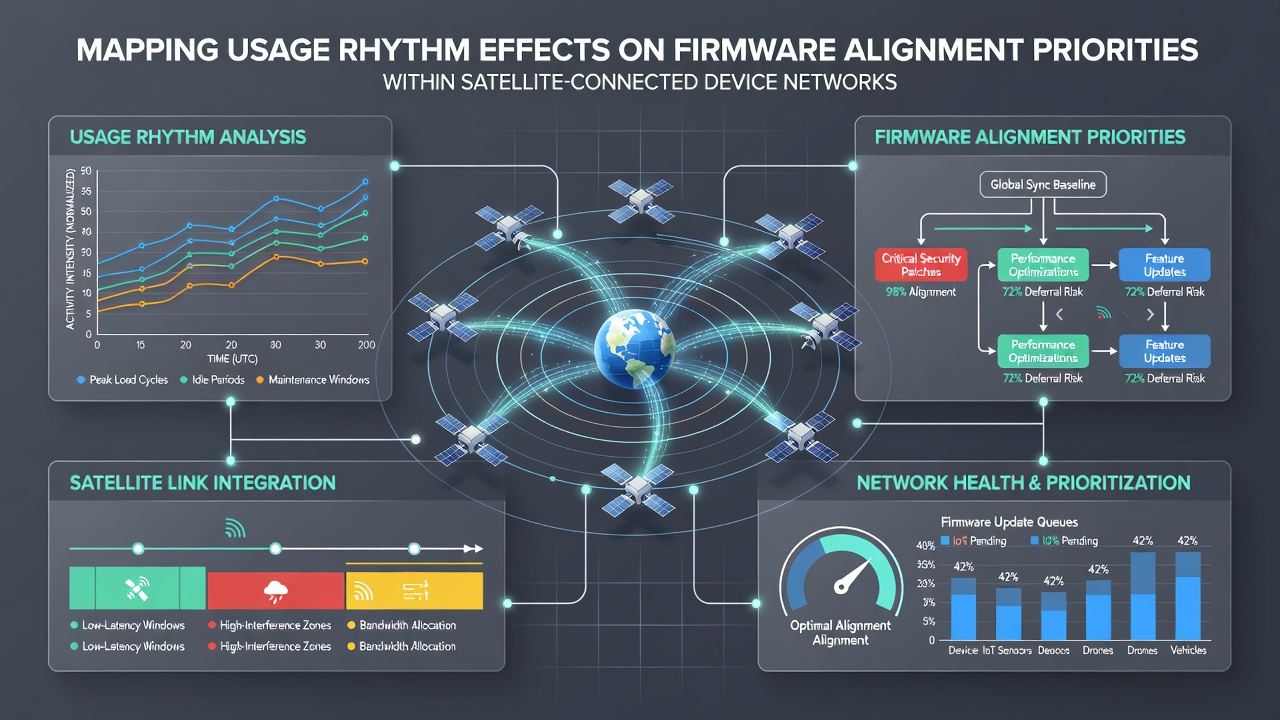
Usage rhythms emerge from recurring cycles in device activity, where sensors in agricultural monitoring stations transmit soil data during daylight hours while maritime tracking units send position reports at fixed intervals throughout voyages. Research from the Canadian Space Agency indicates that these cycles create predictable load spikes on satellite channels, and firmware alignment must account for them because misaligned updates during high-traffic windows can interrupt signal handoffs between ground stations and orbiting relays. Data collected through 2025 shows seasonal shifts in rhythm intensity, particularly in polar regions where extended daylight affects device operation schedules.
Networks that span multiple continents experience overlapping rhythms as devices in Asia enter evening data bursts while those in the Americas begin morning cycles, and this overlap requires centralized platforms to rank firmware priorities based on regional demand forecasts rather than uniform schedules. Experts have observed that devices with intermittent connectivity, such as those on moving platforms, exhibit sharper rhythm peaks because transmission opportunities remain limited by satellite visibility windows.
Firmware Alignment Mechanisms and Priority Mapping
Firmware alignment involves synchronizing software versions across device clusters while preserving network integrity, and priority mapping assigns update sequences according to usage data patterns rather than chronological order. Systems analyze historical transmission logs to identify low-activity periods, then schedule firmware pushes during those windows to reduce collision risks with active data streams. Studies conducted at institutions including the University of Tokyo demonstrate that alignment accuracy improves when rhythm mapping incorporates real-time bandwidth availability from satellite operators.
July 2026 marks the scheduled rollout of enhanced orbital relay protocols that incorporate automated rhythm detection, allowing firmware priorities to adjust dynamically as usage patterns evolve. This development builds on existing frameworks where edge processors evaluate local activity levels before accepting update commands from central controllers. Alignment protocols now factor in latency variations caused by satellite orbital positions, ensuring that devices in high-rhythm zones receive sequenced updates only after confirmation of stable links.
Impact of Rhythmic Patterns on Network Performance
Rhythmic patterns affect network performance because firmware updates consume bandwidth that would otherwise support device-to-satellite exchanges, and misprioritized alignments lead to temporary drops in coverage for dependent applications. Network operators track these effects through metrics such as packet loss rates and connection retry counts, which rise when updates overlap with usage peaks. Evidence from ESA reports highlights cases where agricultural networks in Europe adjusted firmware sequences to nighttime hours, resulting in measurable reductions in transmission interruptions across the following quarter.
Clusters with synchronized rhythms across multiple sites present additional challenges, since simultaneous low-activity periods become rare and force staggered alignment strategies. Technicians map these interactions by overlaying usage graphs from different geographic zones, revealing optimal windows that balance update urgency against operational continuity. Devices operating in disaster response scenarios show irregular rhythms tied to event-driven activations, requiring firmware priorities to shift toward rapid deployment rather than scheduled alignment.
Integration with Broader Satellite Infrastructure
Satellite-connected networks integrate rhythm mapping into broader infrastructure management through data pipelines that feed usage statistics into firmware orchestration tools. This integration allows alignment priorities to respond to orbital mechanics, weather conditions affecting signal quality, and fleet-wide activity forecasts. Observers note that hybrid networks combining satellite links with terrestrial backups gain flexibility, because rhythm data helps route updates through the most stable path at any given moment.
Industry reports from the Australian Space Agency document how rhythm-based prioritization reduced firmware-related downtime in remote mining operations by coordinating updates with shift changes and equipment maintenance cycles. Such approaches rely on continuous data collection from onboard diagnostics that feed into centralized analytics platforms, where algorithms refine priority rankings based on accumulated pattern recognition.
Conclusion
Mapping usage rhythm effects on firmware alignment continues to shape operational strategies within satellite-connected device networks as new protocols emerge and data collection methods advance. Organizations that incorporate these mappings achieve more consistent connectivity across distributed environments, and ongoing developments through 2026 will further refine the connections between activity patterns and update sequencing. The process remains grounded in measurable network behaviors that guide firmware decisions without relying on static schedules.