5 Jun 2026
Mapping Diagnostic Data Flows from End-User Devices to Centralized Platforms for Accelerated Issue Resolution in Hybrid Work Settings
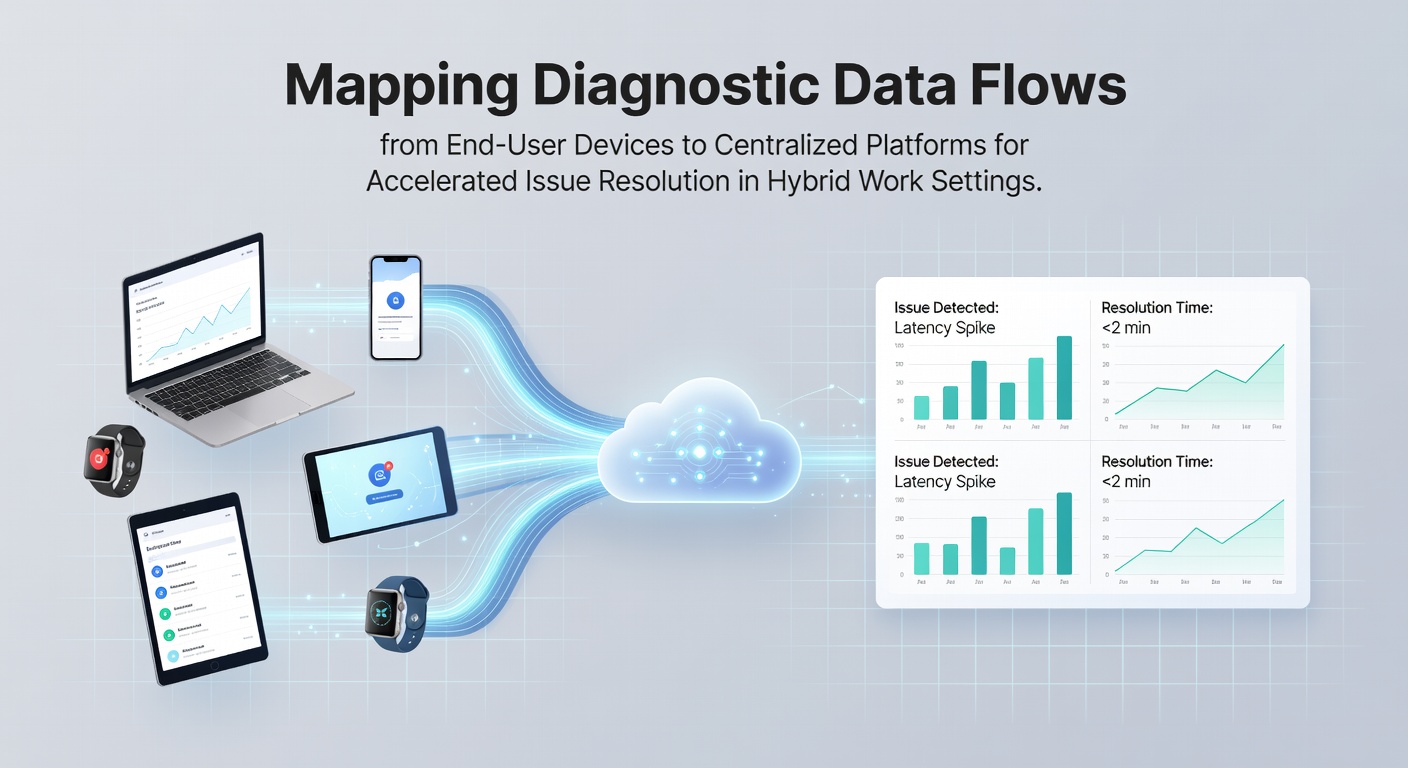
Hybrid work arrangements continue to expand across organizations, which means end-user devices such as laptops, tablets, and smartphones generate continuous streams of diagnostic information that must reach centralized platforms quickly and securely. Researchers track these flows through telemetry logs, system performance metrics, and application error reports that originate at remote locations and travel across corporate networks or public internet connections to servers equipped with analytics engines. Data collection agents installed on each device capture details about CPU usage, memory allocation, network latency, and security events before packaging them into structured packets that follow predefined protocols like MQTT or HTTPS for transmission.
Core Components of Diagnostic Data Mapping
Mapping begins with identification of every data source on the device, including operating system event logs, hardware sensors, and third-party software hooks, then proceeds to classification according to urgency and sensitivity levels. Centralized platforms receive these packets through API endpoints that validate authenticity via certificates and decrypt content using keys managed by enterprise identity services. Observers note that organizations often deploy edge processing nodes closer to user locations to filter redundant information and reduce bandwidth demands while preserving critical alerts for immediate escalation. In June 2026, updates from the National Institute of Standards and Technology highlighted revised guidelines for securing such telemetry channels in distributed environments, emphasizing zero-trust verification at each hop along the path.
Transmission Pathways and Platform Integration
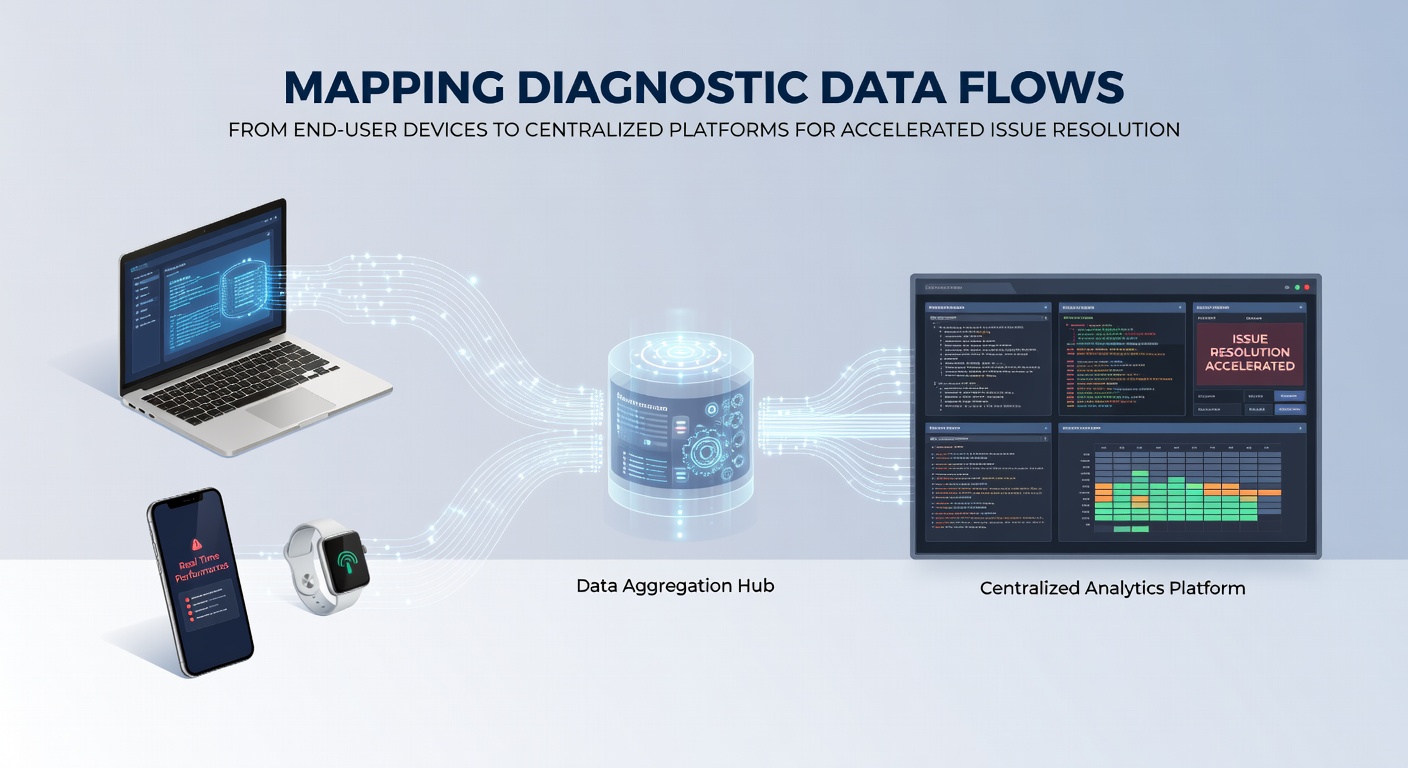
Once collected, diagnostic packets traverse virtual private networks or direct cloud links, where routing tables direct them to specific microservices responsible for aggregation and correlation. Platforms built on Kubernetes clusters or similar orchestration systems parse incoming streams in real time, matching patterns against historical baselines stored in time-series databases. This process allows automated scripts to flag anomalies such as sudden spikes in disk errors or repeated authentication failures without waiting for manual review. Experts at research institutions have documented how integration with configuration management databases enables platforms to cross-reference device health data against known hardware inventories and software versions, thereby accelerating root-cause identification when multiple users report similar symptoms simultaneously.
Accelerating Issue Resolution Through Structured Flows
Structured mapping shortens resolution times because support teams gain immediate visibility into device states rather than relying on user descriptions alone. For instance, a centralized dashboard can display live graphs of battery drain rates across an entire department while correlating those metrics with recent firmware updates pushed during the prior maintenance window. When patterns emerge, such as widespread Bluetooth driver conflicts on a particular laptop model, automated workflows trigger targeted remediation scripts that execute over the same secure channels used for data collection. Those who've studied these systems report that organizations achieve measurable reductions in mean time to repair once mapping includes contextual tags like geographic location and network type, allowing technicians to prioritize issues affecting field staff over those in stable office environments.
Security and Compliance Considerations
Every stage of the data journey requires encryption at rest and in transit along with access controls that limit visibility to authorized personnel only. Regulatory frameworks from bodies such as the European Union Agency for Cybersecurity stress the need for data minimization practices so that platforms store only the diagnostic elements necessary for troubleshooting rather than full activity logs. Mapping exercises therefore include audit trails that record when and where each packet was generated, transmitted, and analyzed, satisfying requirements for accountability during external reviews. Organizations that align their flows with these standards avoid common pitfalls like unencrypted legacy protocols or overly broad permission sets that could expose sensitive user information.
Implementation Practices Across Industries
Implementation typically starts with pilot programs that monitor a subset of devices before scaling to full fleets, during which teams refine mapping schemas to match the unique mix of operating systems and applications in use. Take one financial services firm that discovered its mapping needed additional fields for regulatory reporting after initial deployment revealed gaps in tracking encryption status on mobile endpoints. Academic studies from Canadian universities have examined similar rollouts in healthcare settings, where diagnostic flows must respect patient privacy rules while still delivering enough detail for rapid support response. The resulting architectures often incorporate machine learning models trained on anonymized historical data to predict failures before they affect productivity, further tightening the loop between detection and resolution.
Conclusion
Effective mapping of diagnostic data flows equips organizations with the visibility required to maintain hybrid work environments where issues surface and resolve faster than before. By tracing information from individual devices through secure transmission paths to centralized analysis engines, teams gain the context needed for targeted interventions. Continued refinement of these pathways, guided by evolving standards and integration techniques, supports reliable operations across distributed workforces while meeting security and compliance obligations.