How Permission Hierarchies Evolve During Phased Cloud Migrations in Remote Office Networks
Ines Beck · Aug 3, 2026
How Permission Hierarchies Evolve During Phased Cloud Migrations in Remote Office Networks
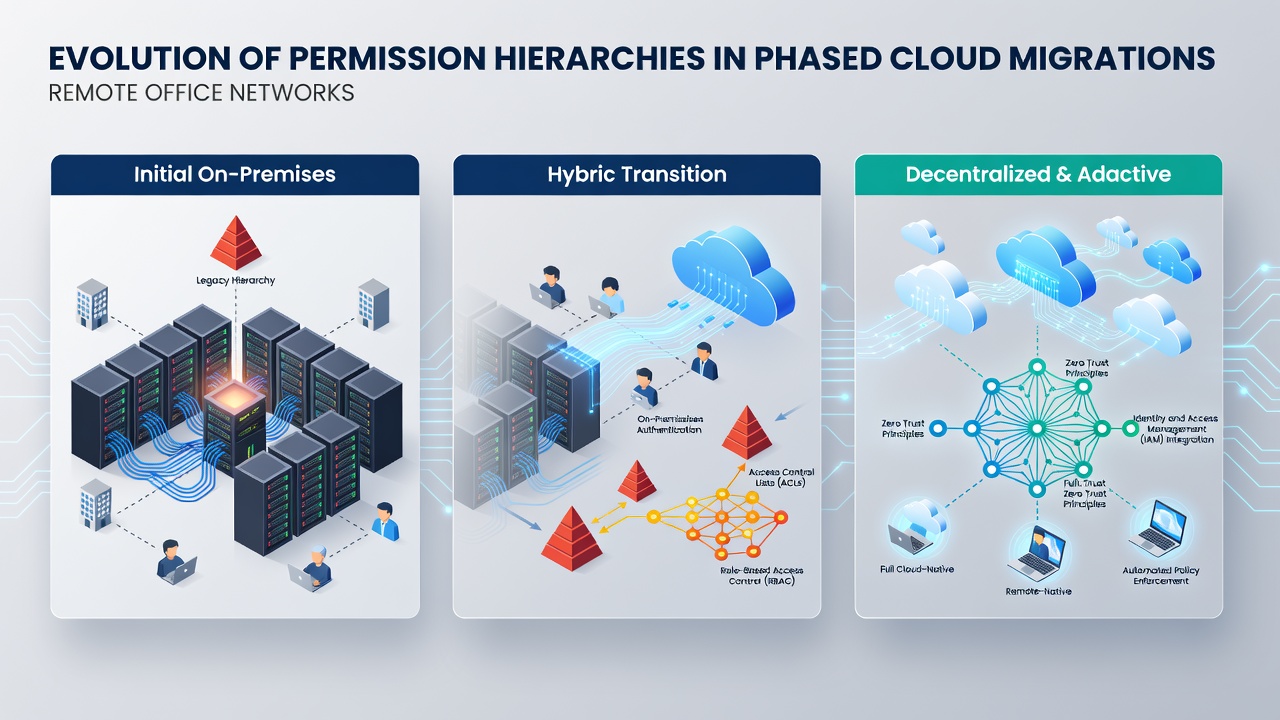
Phased cloud migrations in remote office networks require careful tracking of how access controls shift from local servers to distributed cloud resources, and observers note that permission hierarchies often start rigid yet become more granular as each stage progresses. Data from multiple enterprise deployments shows initial setups rely on broad directory services like Active Directory, while later stages incorporate cloud-native identity providers that segment roles by project, location, and device type. Researchers have documented these changes through case studies involving companies with offices spread across different time zones, where network latency and compliance rules add layers to the process.
Starting Points in Legacy Remote Configurations
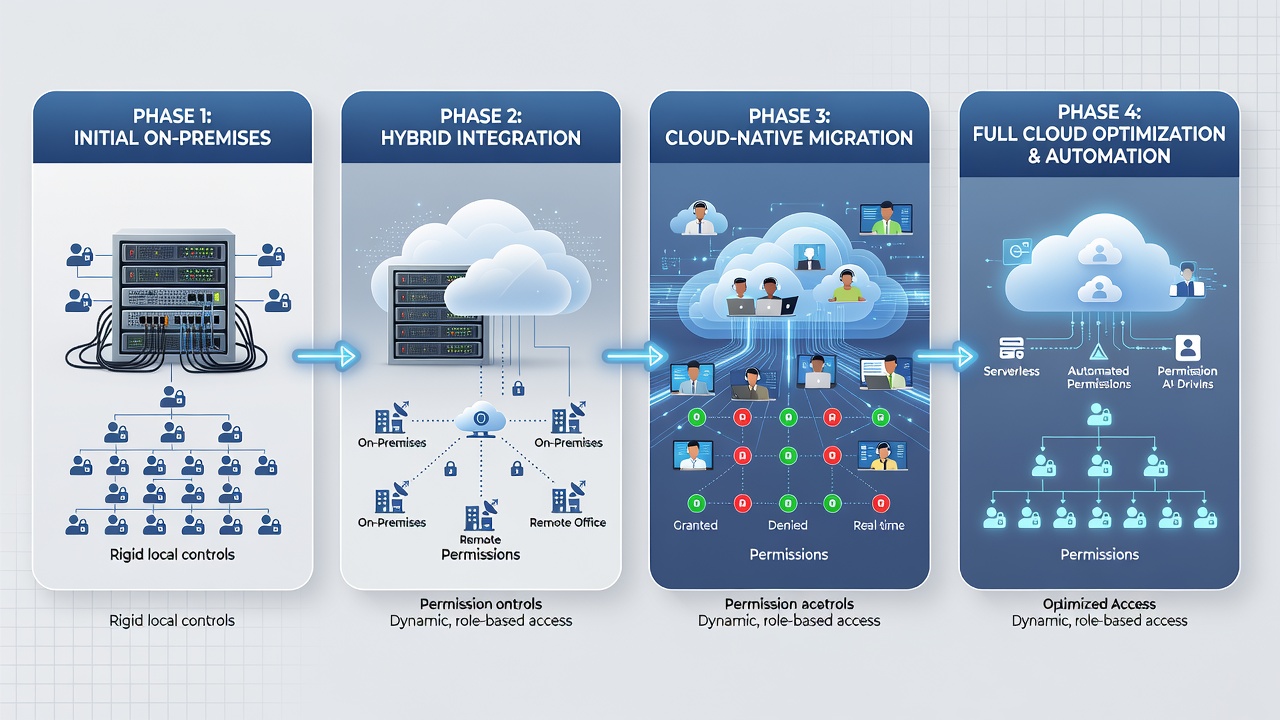
Remote office networks typically begin with centralized permission models that assign users to groups based on job function, and this approach works when all resources sit behind a single firewall. Studies indicate that flat hierarchies suffice for small teams yet create bottlenecks once data moves to cloud storage because every remote user needs consistent authentication paths. Those who have examined pre-migration audits often find that overlapping group memberships lead to unintended access grants, especially when VPN connections bridge multiple sites. Evidence from network logs reveals that early planning phases focus on mapping these groups to cloud equivalents, which sets the foundation for more refined controls.
Permission Adjustments in Early Migration Stages
During the assessment and pilot phases, teams replicate existing hierarchies in test environments before scaling them, and this replication allows comparison of access logs between on-premises and cloud instances. Figures from industry reports show that pilot groups usually receive temporary elevated rights to validate applications, after which permissions tighten based on usage patterns observed over several weeks. Experts tracking these pilots report that remote workers in satellite offices encounter additional constraints tied to bandwidth limits, prompting the introduction of conditional access rules that factor in device health and geographic location. One study revealed that such rules reduce unauthorized attempts by aligning permissions more closely with actual workflow demands rather than blanket policies.
Shifts During Full-Scale Rollouts
As migrations move into production phases, hierarchies expand to include service principals and managed identities that automate routine tasks across remote endpoints, and this automation replaces many manual group assignments. According to findings released by the Australian Cyber Security Centre in August 2026, organizations handling multi-site rollouts saw permission layers multiply when integrating hybrid identity solutions that sync on-premises directories with cloud tenants. Data indicates these layers help isolate sensitive functions, such as financial reporting tools, from general collaboration platforms used by field teams. Observers note that remote offices benefit when hierarchies incorporate time-bound elevations for maintenance windows, which limits exposure windows compared to persistent admin rights.
Refinements in Post-Migration Optimization
Once core workloads reside in the cloud, optimization efforts concentrate on auditing inherited permissions and removing redundant entries that accumulated during earlier stages, and this cleanup often reveals shadow accounts created for temporary contractors. Research from the National Institute of Standards and Technology highlights how zero-trust frameworks encourage continuous verification, which transforms static hierarchies into dynamic models that respond to real-time signals like login behavior and network anomalies. Those monitoring remote networks after migration frequently adjust policies to support bring-your-own-device scenarios common in distributed teams, adding device posture checks that complement traditional role-based controls. Evidence suggests these refinements maintain productivity while tightening security boundaries across scattered locations.
Common Patterns Across Distributed Environments
Multiple migration projects demonstrate that permission hierarchies grow more segmented as dependency on local infrastructure decreases, and segmentation typically follows a pattern of separating read-only access from modification rights at the folder and application levels. Teams coordinating efforts across continents often introduce regional policy variations to meet data residency requirements, which adds another dimension to the hierarchy without disrupting core authentication flows. What's interesting is how logging mechanisms evolve alongside these changes, providing granular trails that support compliance reviews in regulated sectors. Data shows consistent application of least-privilege principles across phases correlates with fewer access-related incidents reported in post-migration assessments.
Conclusion
Permission hierarchies in phased cloud migrations adapt through iterative mapping, testing, and refinement that align on-premises models with cloud capabilities while addressing remote network constraints. The process documented across various deployments illustrates a progression from broad groups to layered, conditional controls that support ongoing operations in distributed settings. Organizations tracking these evolutions gain clearer visibility into access patterns, which supports both security posture and operational continuity as migrations conclude.