How Collaboration Cadences Shape Virtual Platform Rollout Timelines Across Regional Tech Setups
Ines Beck · Jul 27, 2026
How Collaboration Cadences Shape Virtual Platform Rollout Timelines Across Regional Tech Setups
Regional tech setups rely on distinct collaboration cadences that determine how quickly virtual platforms move from planning stages to full deployment, and observers note that these rhythms often dictate whether projects finish on schedule or encounter repeated delays. Studies on distributed teams show that weekly sync meetings combined with asynchronous updates create predictable progress markers, while daily stand-ups paired with real-time messaging channels accelerate decision cycles in some regions but create overload in others. Data from enterprise deployments indicate that mismatched cadences between headquarters and satellite offices extend timelines by several weeks on average.
Defining Cadence Patterns in Multi-Region Deployments
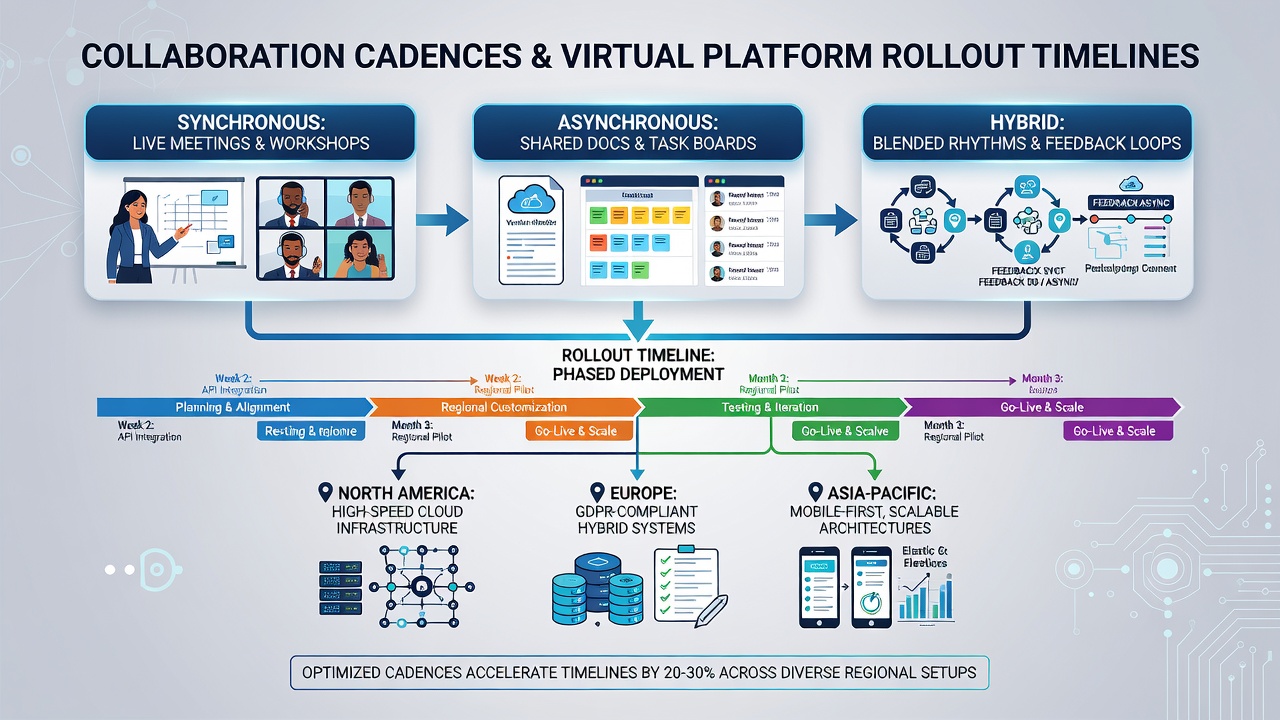
Collaboration cadences encompass the frequency, format, and duration of interactions among technical teams, and researchers have documented how these patterns vary by geography. In North American setups, bi-weekly milestone reviews paired with shared documentation repositories tend to align stakeholders across multiple states, whereas European counterparts often favor monthly strategic sessions supplemented by daily chat threads to accommodate varied national holidays and labor regulations. Australian and Asian-Pacific configurations frequently incorporate quarterly in-depth workshops because of vast time differences, and evidence from industry reports reveals that these longer intervals allow local teams to complete preparatory infrastructure work before global reviews occur.
Impact on Rollout Phases Across Time Zones
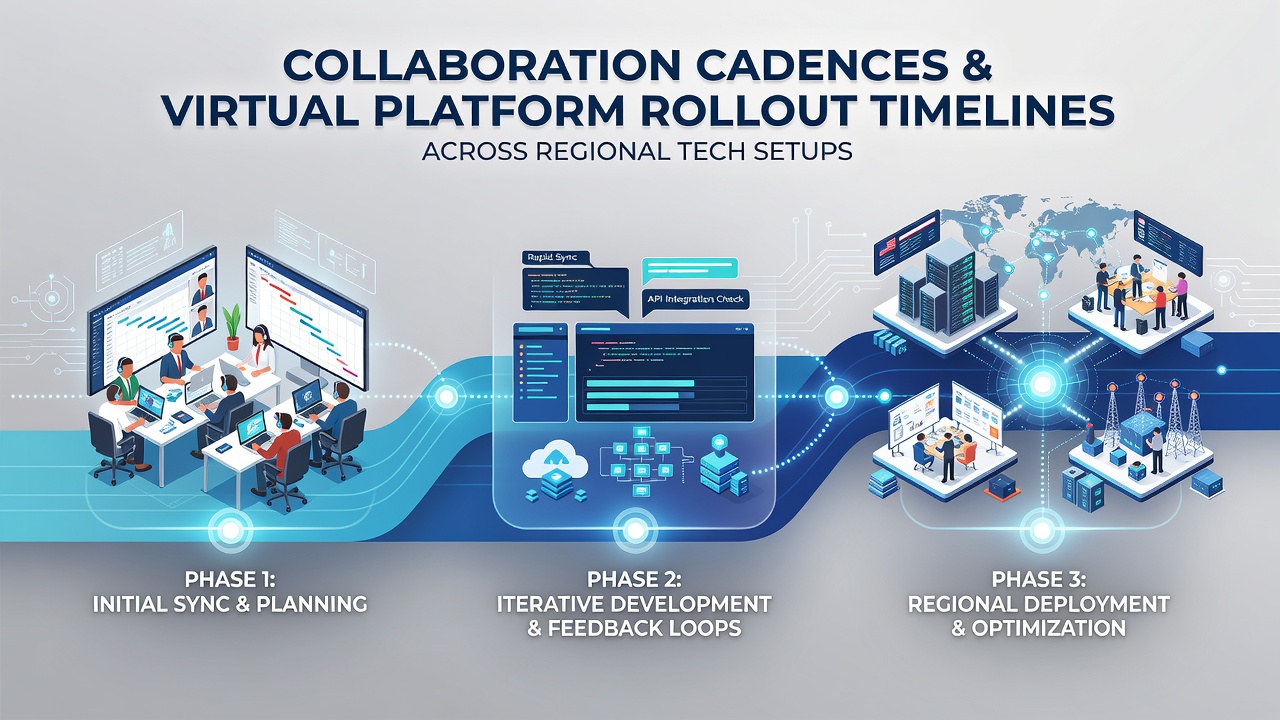
Platform rollout timelines break into phases that include requirements gathering, pilot testing, phased migration, and post-launch stabilization, and each phase responds differently to cadence adjustments. When teams in the same region hold daily coordination calls, pilot testing often concludes two to three weeks earlier than when groups rely on weekly exchanges alone, according to findings published by the OECD in recent digital infrastructure analyses. Yet extended gaps between sessions in cross-continental projects allow regional groups to address local compliance requirements without constant interruptions, which shortens overall migration windows in regulated sectors. Figures from mid-2025 enterprise surveys show that organizations adjusting cadence frequency mid-project reduced average deployment durations by 18 percent in hybrid environments spanning four or more countries.
Regional Variations and July 2026 Benchmarks
By July 2026, several multinational firms had implemented standardized cadence frameworks that accounted for regional work patterns, and these adjustments produced measurable effects on virtual platform schedules. North American teams using synchronized Tuesday morning reviews alongside shared dashboards completed integration testing ahead of European sites that adopted flexible Friday afternoon syncs to respect end-of-week priorities. Data collected across these implementations indicate that Asian-Pacific offices benefited from bi-monthly deep-dive sessions that aligned with fiscal reporting cycles, resulting in fewer rollback events during final rollout stages. External analyses from the Australian Department of Industry, Science and Resources highlight how such tailored cadences helped organizations meet July 2026 targets despite ongoing supply chain constraints affecting hardware availability.
Tools and Protocols That Reinforce Effective Cadences
Digital tools such as project management platforms and automated status bots help maintain consistent interaction rhythms without requiring constant human oversight, and case examples demonstrate their role in keeping rollout timelines intact. When status updates flow automatically into centralized channels every 48 hours, teams across regions gain visibility into blockers before they compound, which shortens troubleshooting windows during the migration phase. Protocols that combine recorded video summaries with written action items allow asynchronous participation, and organizations adopting these methods report fewer missed dependencies between regional clusters. Research from academic studies at institutions like the University of Toronto indicates that hybrid cadence models reduce communication latency by integrating both synchronous checkpoints and documented follow-ups.
Measuring Timeline Outcomes Through Cadence Adjustments
Quantitative tracking of rollout metrics reveals direct correlations between cadence design and completion dates, and metrics collected from over 200 enterprise deployments show that regions with balanced meeting loads finish stabilization phases faster. Shorter, focused sessions held at consistent intervals produce steadier velocity than infrequent lengthy meetings that attempt to cover multiple topics at once, according to aggregated performance data. Teams that introduced mid-project cadence recalibrations based on regional feedback achieved higher on-time delivery rates, particularly when adjustments respected local business hours and cultural preferences for communication density. These patterns hold across industries ranging from financial services to manufacturing, where virtual platform stability depends on coordinated hardware and software alignment.
Conclusion
Collaboration cadences serve as structural elements that determine how virtual platform rollouts unfold across regional tech setups, and the evidence demonstrates that deliberate alignment of meeting frequency, format, and regional context produces more reliable timelines. Organizations that map their interaction rhythms to the operational realities of each location continue to report improved phase completion rates and reduced rework. As deployments evolve through 2026 and beyond, the relationship between cadence design and rollout efficiency remains a measurable factor in distributed technology environments.