29 May 2026
Firmware Sequencing Protocols: Aligning Automated Installations with Enterprise Device Lifecycles
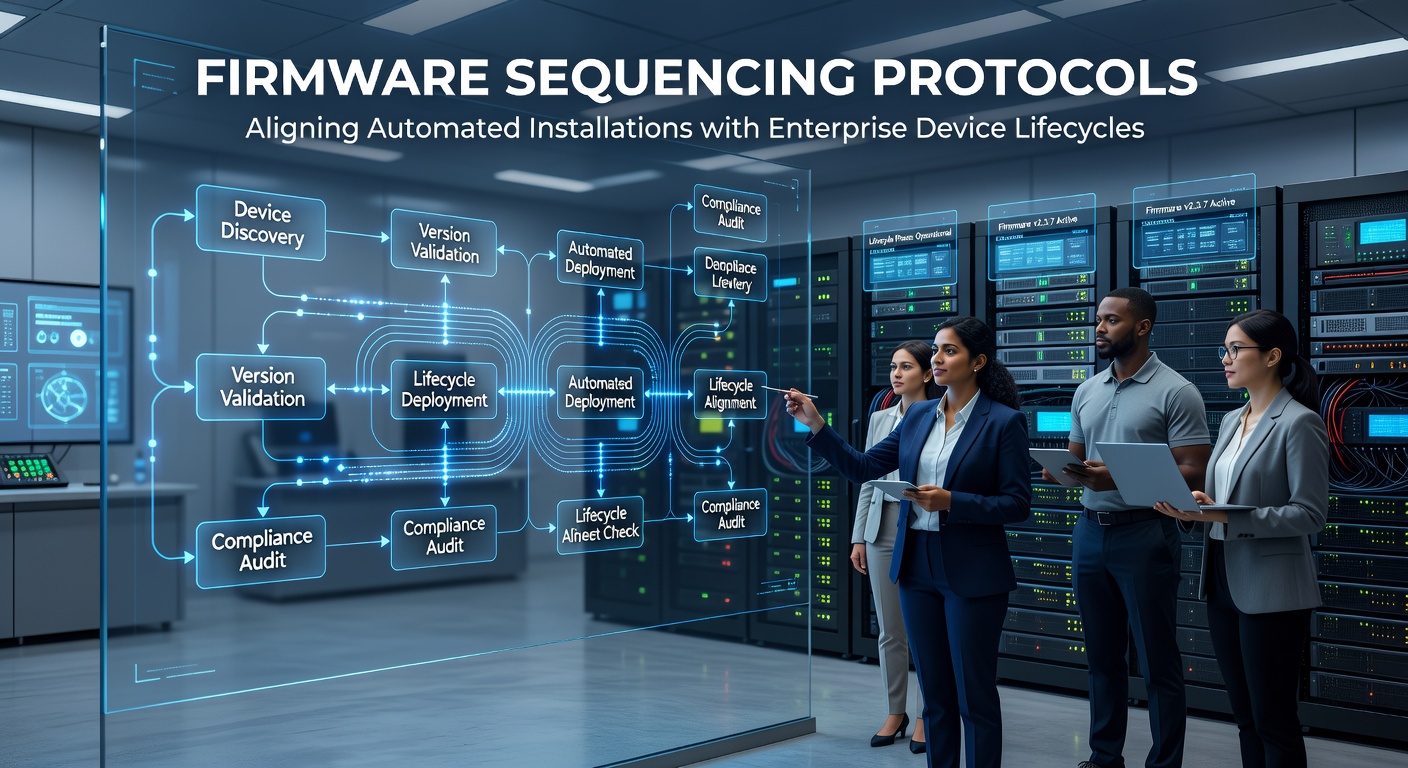
Enterprise environments rely on precise coordination between firmware updates and the full span of device lifecycles from initial procurement through active service and eventual retirement. Firmware sequencing protocols establish ordered steps that automated systems follow when applying updates, which prevents conflicts that arise when multiple devices receive patches out of sequence. These protocols map directly onto lifecycle stages so installations occur at optimal moments rather than during peak operational windows.
Core Components of Firmware Sequencing
Protocols begin with dependency mapping that identifies which firmware versions require prior updates on related hardware components. Automated tools then generate installation queues based on device roles within the network infrastructure. Observers note that successful sequencing depends on real-time inventory data pulled from management platforms, allowing systems to adjust sequences when hardware configurations change mid-cycle. Research from the National Institute of Standards and Technology outlines how dependency graphs reduce rollback incidents by ensuring prerequisites complete first.
Validation checkpoints form the next layer where each sequenced step undergoes integrity checks before the process advances. These checks compare cryptographic hashes against manufacturer baselines and confirm hardware compatibility through sensor readings. When a checkpoint fails, the protocol triggers isolation of the affected device while the remainder of the queue continues, preserving overall system stability during large-scale rollouts.
Mapping Protocols to Device Lifecycle Stages
During procurement adn initial deployment phases, sequencing protocols enforce baseline firmware versions that align with enterprise security policies. Automated installation scripts pull approved images from centralized repositories and apply them before devices connect to production networks. This early alignment reduces exposure windows that open when factory firmware remains unpatched for extended periods.
Operational maintenance cycles introduce more complex sequencing requirements because devices operate under varying loads and connectivity states. Protocols incorporate scheduling logic that factors in usage patterns, battery levels for mobile assets, and redundancy availability across clusters. Data from industry reports indicate that organizations achieve higher success rates when they integrate these factors into automated decision trees rather than relying on fixed calendars.
Automation Frameworks in Practice
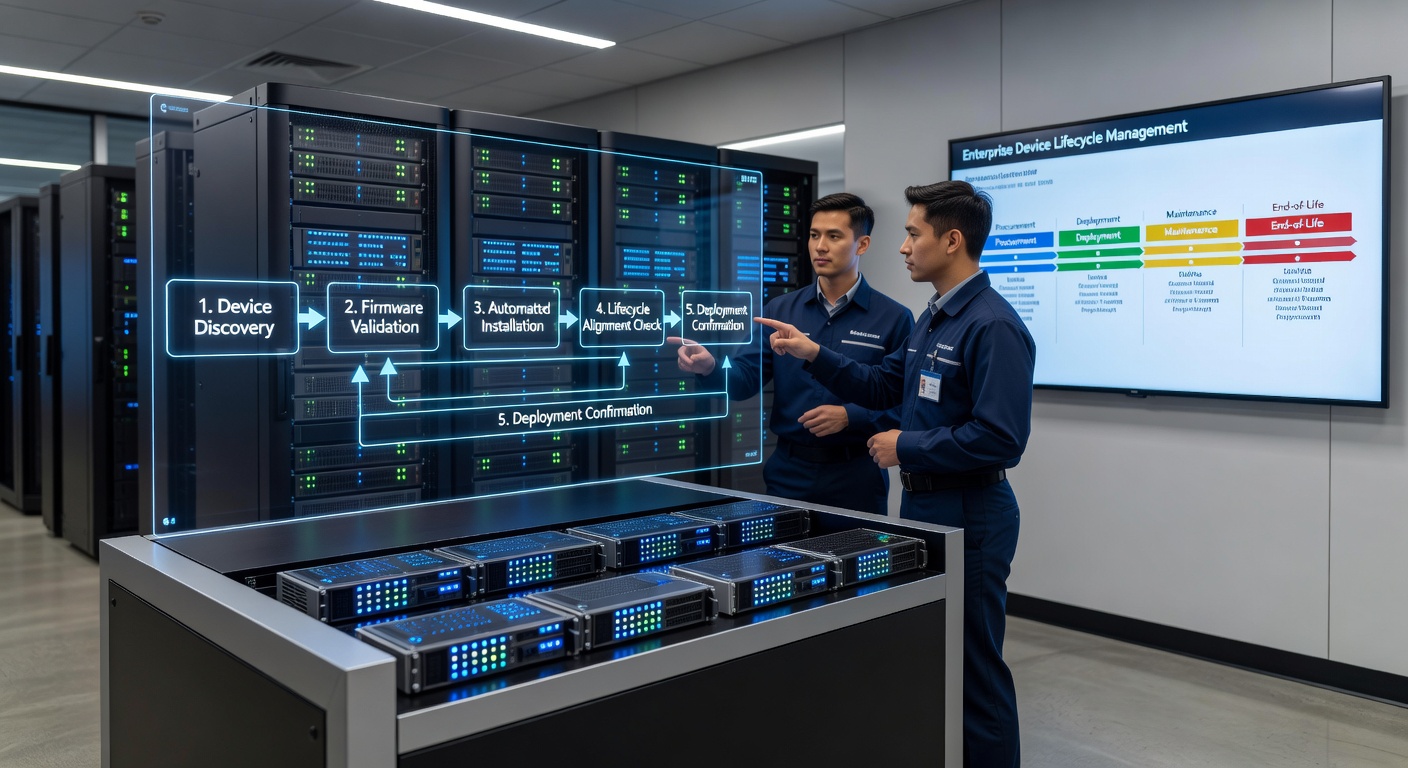
Modern frameworks combine orchestration engines with device management agents to execute sequenced installations across distributed sites. Agents report local conditions back to the central engine, which recalculates sequences if environmental factors shift unexpectedly. European Union Agency for Cybersecurity documentation highlights similar approaches that maintain audit trails for compliance verification throughout the process.
Rollback mechanisms sit alongside forward sequencing to handle cases where post-installation testing reveals incompatibilities. The protocol automatically reverts affected devices to the prior stable state while logging the deviation for later analysis. This dual-path capability keeps enterprise fleets functional even when individual updates encounter edge-case issues tied to specific hardware revisions.
Standards Evolution and 2026 Milestones
Standards bodies continue refining firmware handling guidelines to address emerging hardware architectures and supply chain complexities. In May 2026 several updates to international frameworks take effect, requiring documented sequencing verification for devices entering regulated sectors. These changes emphasize automated logging that captures every decision point within the protocol execution path, creating traceable records for auditors.
Academic studies from institutions across North America and Asia examine how these evolving standards influence lifecycle management costs. Findings show measurable reductions in unplanned downtime when enterprises adopt sequencing protocols that adapt dynamically to new compliance layers. Integration with existing lifecycle management platforms occurs through standardized APIs that accept sequence definitions without requiring custom code for each device category.
Implementation Patterns Across Sectors
Healthcare systems apply firmware sequencing during equipment refresh cycles to maintain medical device certification status. Protocols pause sequences when patient monitoring workloads peak and resume only after load thresholds drop below defined limits. Manufacturing environments follow parallel patterns yet add extra validation steps for industrial control hardware where firmware changes can affect production line calibration.
Government agencies coordinate sequences across classified and unclassified networks by maintaining separate protocol instances that share only non-sensitive metadata. This separation preserves security boundaries while still allowing centralized visibility into overall fleet health metrics. Observers note consistent patterns where early adoption of sequenced automation correlates with fewer audit findings related to outdated firmware.
Conclusion
Firmware sequencing protocols deliver structured automation that aligns update processes with enterprise device lifecycles at every stage. Organizations gain predictable outcomes when dependency mapping, validation checkpoints, and adaptive scheduling operate together within unified frameworks. As standards advance through 2026 and beyond, these protocols continue evolving to meet both technical and regulatory demands across diverse operational contexts.