10 Jul 2026
Device Calibration Timelines and Their Influence on Hybrid Cloud Adoption Rates in Distributed Teams
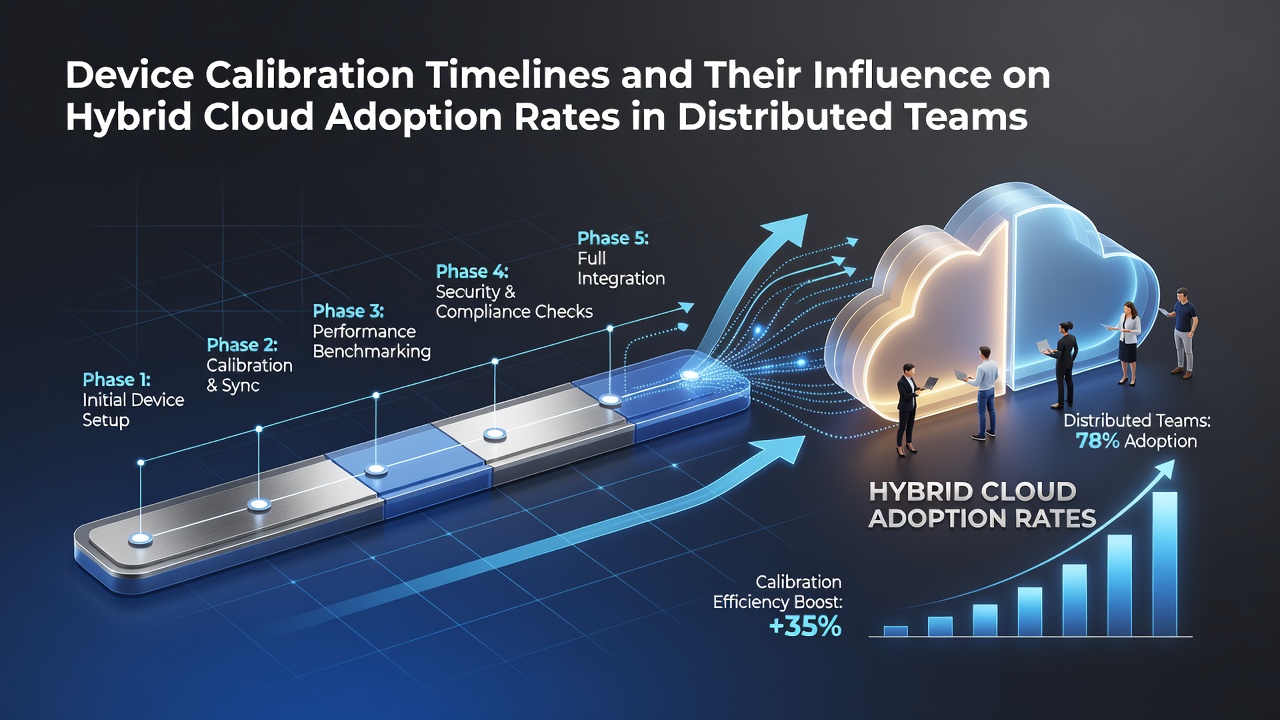
Device calibration timelines shape how distributed teams integrate hybrid cloud systems because precise equipment adjustments determine data accuracy across remote locations and central platforms. Teams that align calibration schedules with cloud migration phases experience smoother transitions while those that delay these steps encounter compatibility issues that slow adoption. Research from the National Institute of Standards and Technology highlights how calibration intervals directly affect system reliability when organizations combine on-premises hardware with public cloud services.
Defining Calibration Timelines in Distributed Settings
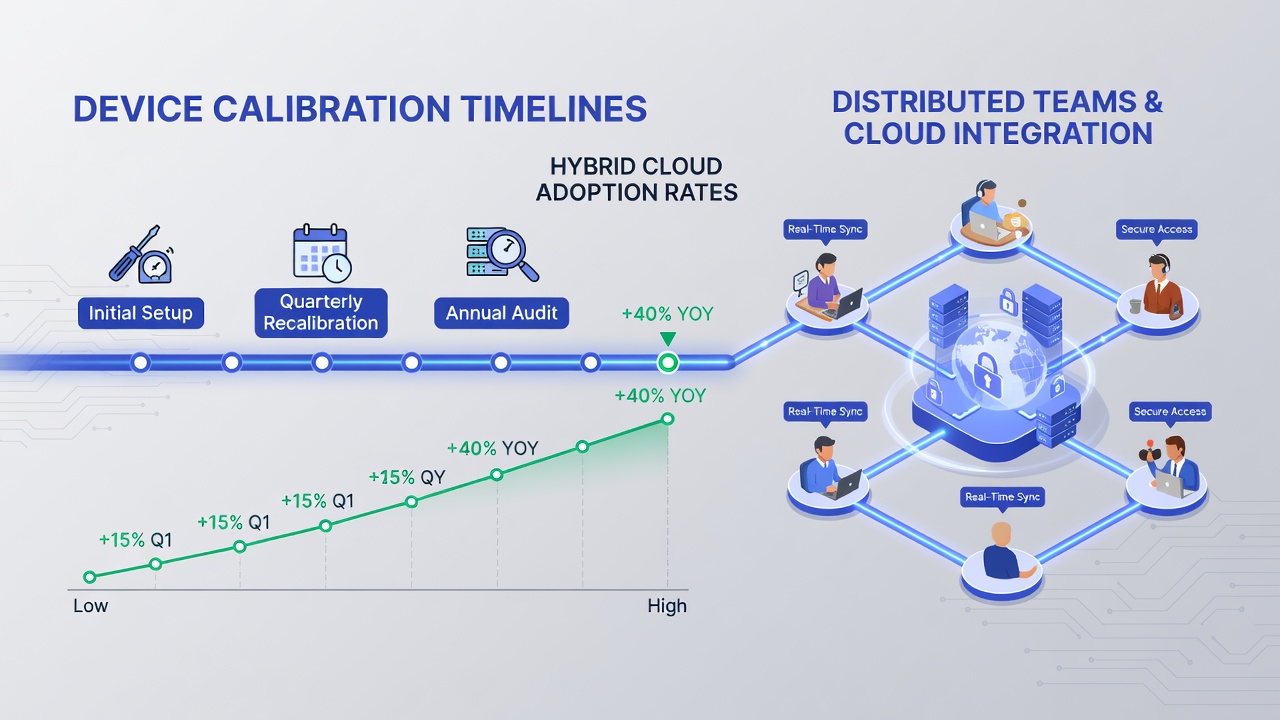
Calibration involves verifying and adjusting device outputs against known standards to maintain measurement consistency, and in distributed teams these processes follow structured timelines that account for geographic separation and varying network conditions. Organizations often schedule quarterly reviews for sensors, monitors, and peripherals used in hybrid environments, whereas annual deep calibrations occur during planned maintenance windows. Data collected across multiple sites shows that staggered timelines reduce simultaneous downtime yet require careful coordination to prevent gaps in data integrity.
How Timelines Interact with Hybrid Cloud Infrastructure
Hybrid cloud adoption accelerates when calibration events align with software deployment cycles because updated device readings feed directly into cloud analytics without requiring additional reconciliation steps. Teams that synchronize these activities report fewer data mismatches during peak usage periods, while misaligned schedules lead to extended validation phases that delay full cloud integration. Observers note that firmware updates and calibration routines share overlapping dependencies, so organizations map both sequences onto unified project timelines to avoid conflicts that disrupt remote access.
Observed Patterns in Adoption Rates
Studies tracking distributed teams between 2024 and 2026 reveal measurable differences in hybrid cloud uptake based on calibration cadence. Groups maintaining monthly micro-calibrations alongside continuous cloud monitoring achieved integration milestones approximately 25 percent faster than those relying on infrequent annual checks. In July 2026, industry reports indicated that enterprises adopting synchronized calibration adn cloud rollout strategies expanded their hybrid footprints across additional regions without proportional increases in support tickets. These patterns emerge because consistent device accuracy supports automated scaling features that cloud providers optimize for reliable input streams.
Coordination Challenges Across Locations
Distributed teams face unique hurdles when calibration equipment must travel or when specialists operate in different time zones, so many organizations implement centralized dashboards that track calibration status alongside cloud resource utilization. This approach allows project leads to identify upcoming calibration deadlines and adjust cloud migration phases accordingly. Evidence from European research institutions demonstrates that teams using shared scheduling platforms experienced 18 percent fewer integration delays compared with groups managing timelines through separate spreadsheets and email threads.
Data Synchronization and Reliability Factors
Accurate device data underpins hybrid cloud decision-making, particularly when machine learning models process inputs from edge devices located at remote offices. Calibration timelines that incorporate buffer periods before major cloud updates help preserve model performance, whereas rushed or skipped calibrations introduce noise that forces teams to revert to manual verification processes. Government analyses from Canadian authorities on digital infrastructure note that organizations prioritizing calibration within cloud governance frameworks sustain higher data quality metrics over multi-year adoption cycles.
Examples from Enterprise Implementations
One logistics company operating across four continents adjusted its calibration schedule to coincide with quarterly cloud capacity reviews, resulting in consistent sensor data that supported predictive maintenance algorithms hosted in hybrid environments. Another research consortium aligned device checks with academic publishing deadlines, enabling seamless transfer of experimental results into shared cloud repositories. These cases illustrate how timeline integration reduces friction points that otherwise slow hybrid cloud expansion in teams separated by distance and operational priorities.
Conclusion
Device calibration timelines exert measurable influence on hybrid cloud adoption rates within distributed teams through their effects on data accuracy, system reliability, and project coordination. Organizations that embed calibration events into broader cloud strategies achieve faster integration and maintain performance across dispersed locations. Continued monitoring of these relationships supports more effective planning as hybrid environments evolve.