15 May 2026
Crafting Cohesive Tech Ecosystems: Merging Remote Support Tactics with Web Development Practices for Enhanced Resilience
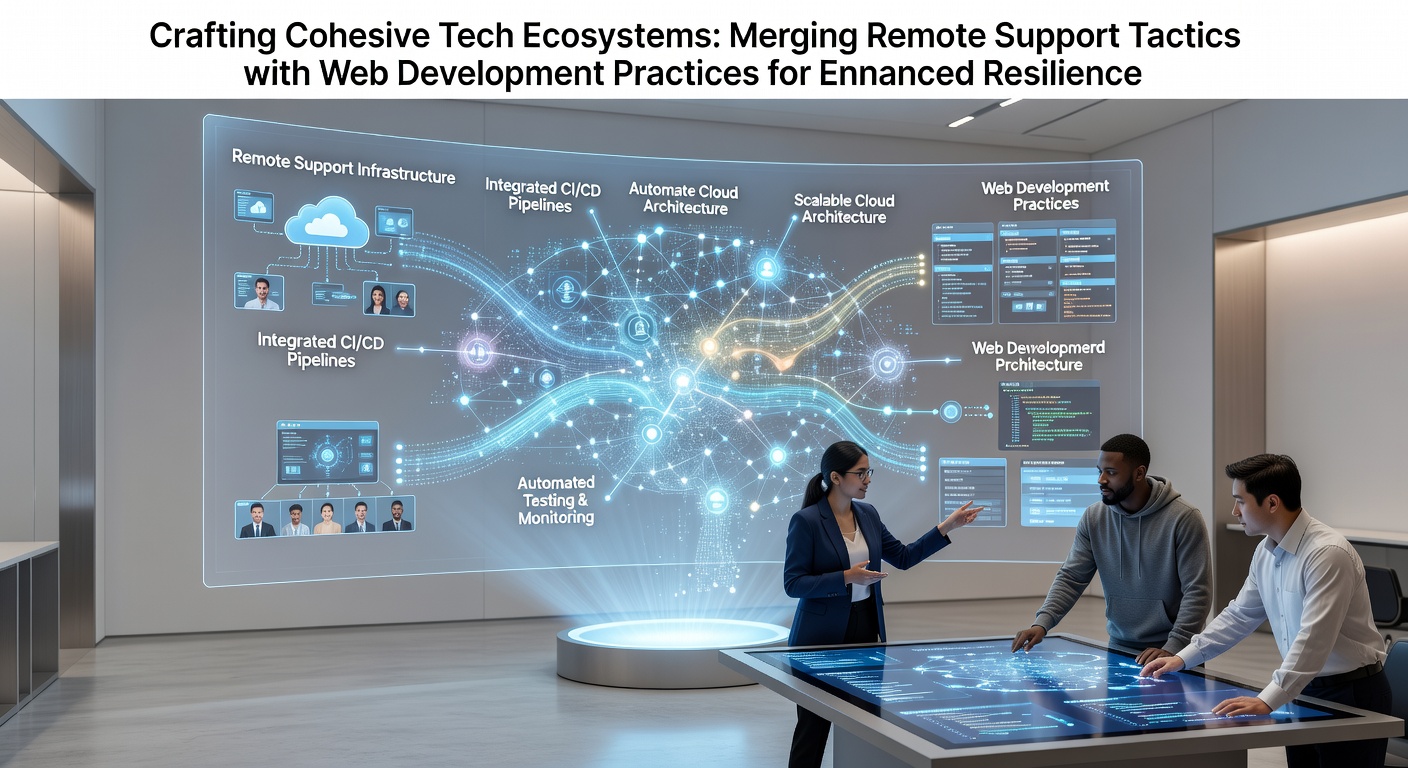
Organizations continue to build tech ecosystems that combine remote support methods with established web development techniques, and this integration creates systems capable of withstanding disruptions while maintaining operational continuity. Data from industry analyses in May 2026 shows that companies adopting these merged approaches report fewer extended outages compared to those relying on isolated strategies, as the combination allows for proactive monitoring alongside code-level adjustments that address both immediate issues and underlying architectural weaknesses.
Defining Cohesive Tech Ecosystems
Cohesive tech ecosystems emerge when remote support tactics such as real-time diagnostics, automated alerting systems, and virtual troubleshooting protocols connect directly with web development practices including modular coding standards, API-driven architectures, and continuous integration pipelines. Researchers at institutions like Carnegie Mellon University have documented how these connections enable teams to detect performance bottlenecks through remote tools and then apply targeted code refinements without requiring physical access to hardware. The result appears in environments where support staff and developers share data streams that inform both immediate fixes and long-term structural improvements.
Core Remote Support Tactics in Practice
Remote support tactics center on secure access protocols, predictive analytics for issue forecasting, and collaborative platforms that allow technicians to guide users through resolutions while simultaneously logging system states for later analysis. According to the National Institute of Standards and Technology's cybersecurity framework updates, these tactics reduce mean time to resolution by linking diagnostic data directly to development environments. Teams often implement session recording alongside version control hooks so that every remote intervention feeds back into code repositories for review and refinement.
Web Development Practices That Support Integration
Web development practices contribute through responsive design patterns, microservices structures, and automated testing suites that align with remote oversight capabilities. Developers embed health-check endpoints and logging mechanisms into applications so that remote teams can query system status without disrupting user sessions. This setup supports rapid iteration because code changes can deploy through pipelines that incorporate feedback from support logs, creating a feedback loop where resilience improves with each cycle.
Strategies for Merging the Two Approaches
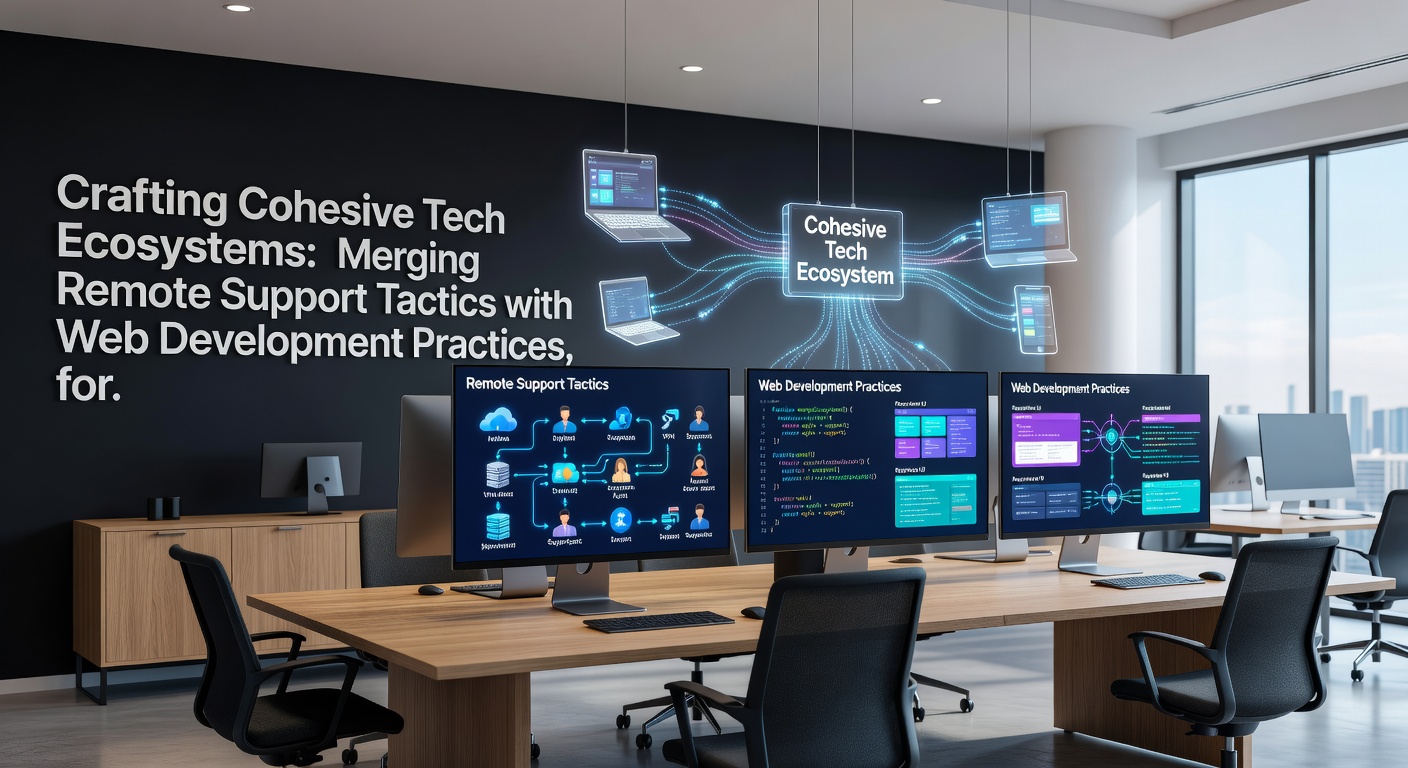
Effective merging begins with shared data standards that let remote tools communicate with development frameworks in real time. Organizations establish unified dashboards displaying both support metrics and code performance indicators, which allows teams to correlate user-reported problems with specific code paths. One documented case involved a mid-sized enterprise that connected its remote monitoring software to continuous deployment tools, resulting in automated rollbacks triggered by support alerts before issues affected broader user bases. This approach relies on secure API connections and role-based access controls to maintain separation between support operations and development workflows while enabling seamless information exchange.
Enhancing System Resilience Through Combined Methods
Resilience grows when remote support provides immediate visibility into live environments and web development practices deliver scalable recovery options. For instance, containerized applications allow remote teams to spin up isolated instances for testing fixes while production systems remain stable. Reports from the European Union Agency for Cybersecurity highlight that organizations using these layered strategies experience faster recovery from distributed denial-of-service events because support protocols trigger development scripts that reroute traffic or patch vulnerabilities on the fly. The combination also supports compliance requirements by maintaining detailed audit trails across both support sessions and code commits.
Implementation Considerations for Teams
Teams begin implementation by auditing existing remote tools and development stacks to identify integration points such as compatible logging formats or shared authentication services. Training programs then bridge knowledge gaps so support personnel understand basic code structures while developers learn to interpret remote diagnostic outputs. Pilot projects often focus on non-critical applications first, allowing refinement of workflows before scaling to production systems. Data collected during these phases informs adjustments to automation rules that balance rapid response with thorough validation steps.
Observed Outcomes in Current Deployments
Deployments completed by early 2026 demonstrate measurable gains in uptime and reduced support ticket volumes when remote tactics and web practices operate as unified processes. Organizations note that predictive elements from remote analytics help prioritize development backlogs toward areas most likely to generate future incidents. This prioritization stems from aggregated data rather than isolated reports, which leads to more efficient resource allocation across technical teams.
Conclusion
The integration of remote support tactics with web development practices forms tech ecosystems that adapt to challenges through coordinated responses rather than reactive patches. As environments evolve in May 2026 and beyond, organizations that maintain these connections position themselves to sustain operations amid increasing complexity, drawing on documented patterns from standards bodies and research institutions to guide ongoing refinements.