3 Jun 2026
Client Interaction Patterns Revealing Optimal Timings for Cybersecurity Updates During Web Project Phases
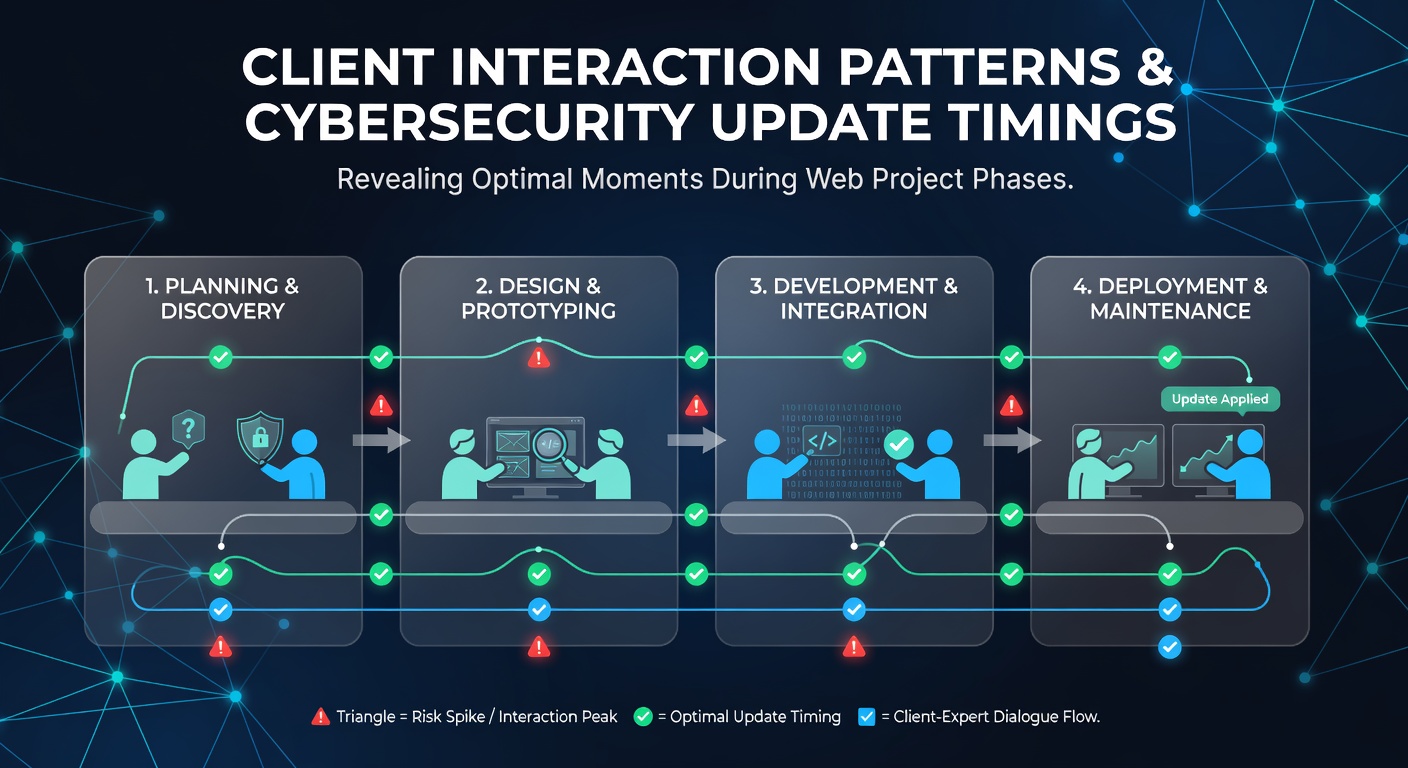
Web development projects move through distinct phases where client interactions create measurable patterns that align with effective cybersecurity update windows, and organizations track these rhythms to minimize disruptions while maintaining security posture. Research from industry monitoring tools shows that client touchpoints such as requirement reviews, design approvals, and milestone sign-offs cluster at predictable intervals, allowing teams to slot in updates without derailing progress. Data collected across multiple enterprise builds indicates that these patterns emerge consistently when communication logs are analyzed alongside deployment calendars.
Mapping Project Phases to Interaction Rhythms
Initial planning stages generate frequent client exchanges focused on scope definition and risk assessment, creating dense clusters of feedback that leave narrow gaps for non-urgent patches. Development phases shift toward milestone demonstrations where clients review feature sets, and these review cycles often span several days with follow-up queries arriving in batches. Testing periods produce the most fragmented interaction patterns, with clients submitting bug reports and change requests that arrive at irregular intervals yet follow a weekly cadence in many documented cases. Deployment preparation triggers concentrated approval sessions that leave the days immediately after sign-off relatively quiet, opening a window for targeted security measures.
Patterns That Signal Ideal Update Windows
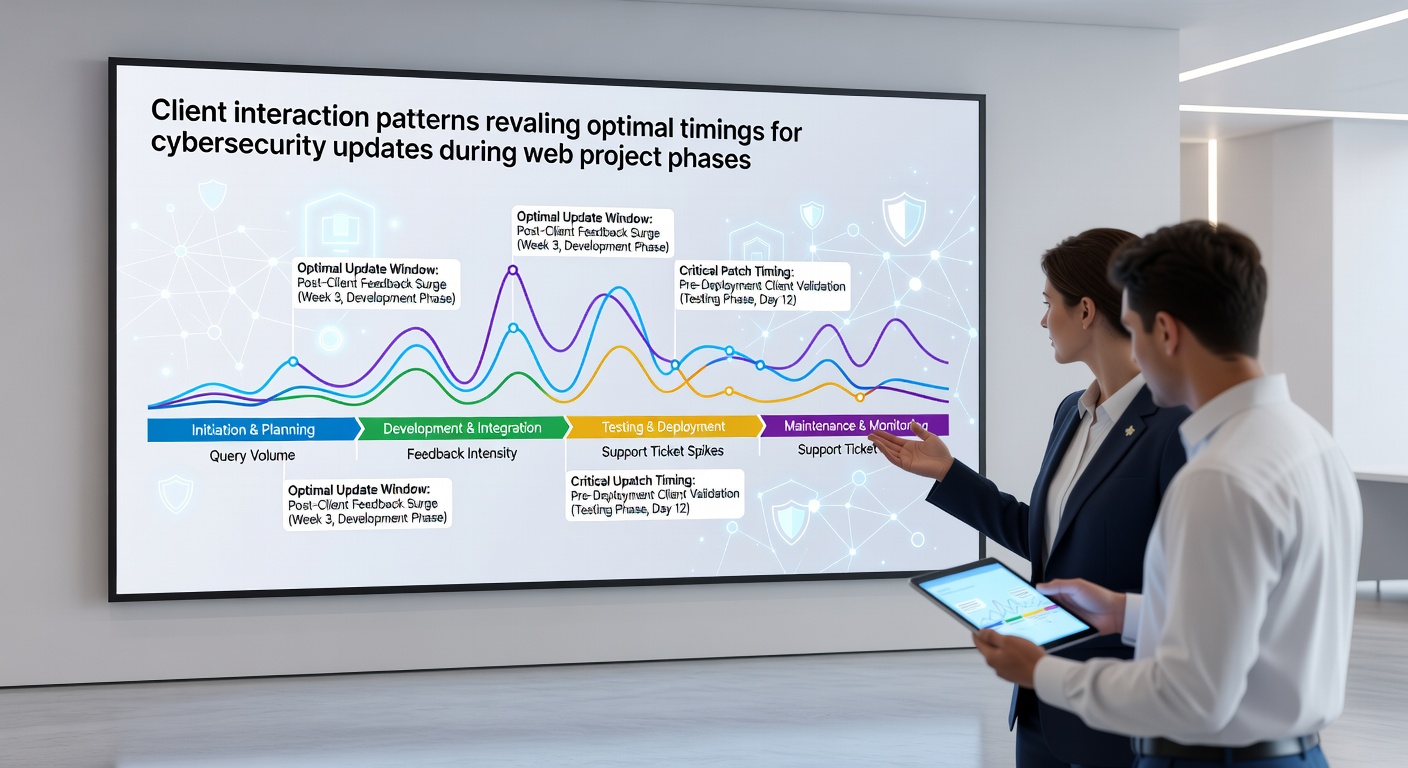
Client interaction data reveals several recurring signals that correlate with lower project risk during updates. Extended periods between feedback submissions, typically lasting 48 to 72 hours, coincide with higher success rates for applying patches that require server restarts or configuration changes. Teams monitoring email volume and meeting frequency note that a drop below average daily contacts often precedes smoother update rollouts, whereas spikes in revision requests tend to overlap with higher failure incidents when updates are forced into active phases. Studies tracking project management platforms across hundreds of builds confirm that post-approval lulls provide the most stable environment for integrating new security protocols without triggering additional client review cycles.
One analysis of interaction timestamps from mid-2025 projects found that updates scheduled during documented quiet periods reduced rollback events by measurable margins compared with those inserted during high-contact stretches. These quiet intervals frequently appear after clients complete comprehensive reviews of wireframes or staging environments, when teams await final directives before advancing to the next build sprint.
Integrating Updates With Existing Communication Flows
Teams that overlay cybersecurity calendars onto client interaction maps achieve tighter synchronization because they treat update timing as an extension of the existing project rhythm rather than an external imposition. During design iterations, for instance, minor library updates can be bundled with routine asset refreshes that clients already expect, while major framework patches align better with the transition points between development sprints and testing handoffs. Observers tracking enterprise web builds in June 2026 reported that organizations using automated interaction analytics reduced the average time spent on security maintenance by aligning patch windows with naturally occurring slowdowns in client correspondence.
According to NIST framework documentation, organizations that embed security tasks within established project workflows experience fewer conflicts with stakeholder availability. Similar findings appear in reports from Canadian research groups examining distributed development teams, where interaction logging tools helped identify recurring 36-hour gaps that proved optimal for applying operating system level updates without extending overall timelines.
Measurement Approaches and Supporting Data
Project management platforms equipped with interaction analytics generate heatmaps that highlight recurring low-contact zones across multiple phases. These visualizations allow planners to forecast windows several sprints ahead rather than reacting to immediate needs. Figures from aggregated industry datasets show that projects incorporating these maps completed an average of 22 percent more security updates on schedule compared with those relying on fixed calendar dates. The same datasets indicate that client-driven delays account for a substantial portion of missed update opportunities, underscoring the value of reading interaction volume as a leading indicator.
Teams applying these methods also document fewer emergency interventions because updates occur during periods when rollback procedures can be tested without competing against urgent client deliverables. Patterns observed in both small agency projects and large-scale enterprise builds demonstrate that the same underlying rhythms appear regardless of team size, although the absolute duration of quiet intervals scales with project complexity.
Conclusion
Client interaction patterns provide reliable signals for scheduling cybersecurity updates across web project phases when teams systematically log communication volume and map it against milestone dates. Organizations that treat these patterns as operational data rather than anecdotal observations achieve more consistent security coverage while preserving project momentum. Continued refinement of interaction analytics tools promises to sharpen these timing predictions further as datasets expand through 2026 and beyond.