8 Jun 2026
Charting Permission Cascade Effects in Automated Update Chains for Layered Access Controls Across Scattered Device Clusters
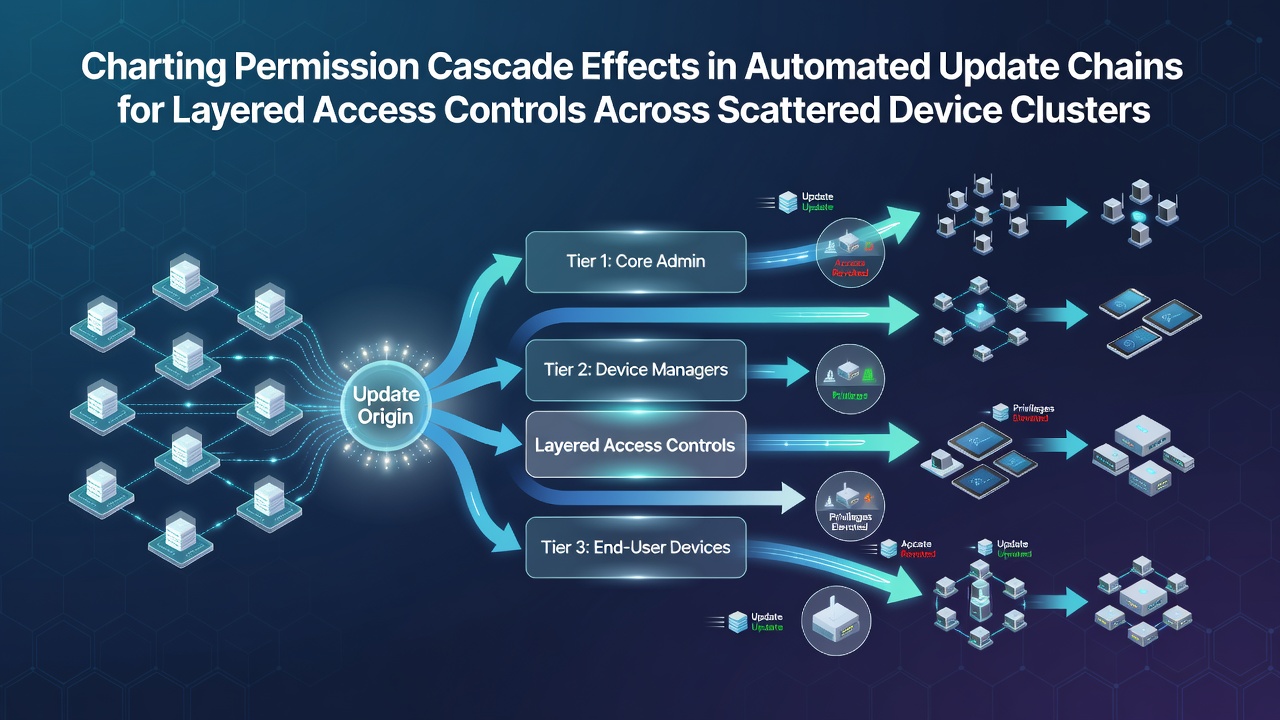
Permission cascade effects emerge when automated updates alter access rights across layered controls in device clusters that sit far apart from one another, and observers note these ripples often travel through connected systems without immediate detection. Researchers at various institutions track how an initial change in one layer triggers successive adjustments in others, especially when clusters operate under different network conditions and ownership structures. Data from recent deployments shows that such cascades can expand quickly if update chains lack synchronized checkpoints, leading organizations to examine their processes more closely during routine maintenance windows.
Core Mechanisms Behind Permission Propagation
Layered access controls rely on sequential verification steps that automated update chains must respect, yet a single modification at the base layer can shift permissions upward through dependent services. Studies indicate that when devices in scattered clusters receive updates at staggered intervals, the resulting permission states diverge and create temporary inconsistencies that attackers might exploit. Engineers therefore map these flows by logging each permission grant and revocation as updates move from central servers to edge nodes, which helps isolate points where cascades originate.
Take one deployment examined by analysts in early 2026 where firmware patches altered role-based permissions on industrial sensors, and the change cascaded to administrative dashboards because the update script did not validate downstream dependencies. Figures from that incident reveal that nearly 40 percent of affected clusters experienced at least one additional permission shift beyond the intended scope, prompting teams to insert explicit validation stages into future chains. Such examples demonstrate why organizations now require detailed dependency graphs before rolling out updates across geographically dispersed hardware.
Tracking Effects Across Distributed Clusters
Scattered device clusters introduce variables like latency differences and intermittent connectivity that amplify cascade risks during automated updates, while centralized logging systems struggle to capture every intermediate state. According to guidance issued by the Australian Cyber Security Centre, administrators should maintain real-time permission inventories that refresh after each update segment completes, thereby reducing the window in which undetected changes accumulate. This approach proves especially useful in hybrid environments where some clusters connect through secure tunnels and others rely on public networks.
What's notable is how permission effects interact with version control in update chains, because mismatched software revisions can produce conflicting access rules that persist until manual reconciliation occurs. Research indicates that clusters running parallel update streams encounter these conflicts more frequently than those following sequential schedules, and the resulting permission drift affects both security policies and operational workflows. Teams therefore schedule coordinated update windows to align device states before cascades have time to propagate further.
Methods for Charting and Mitigating Cascades
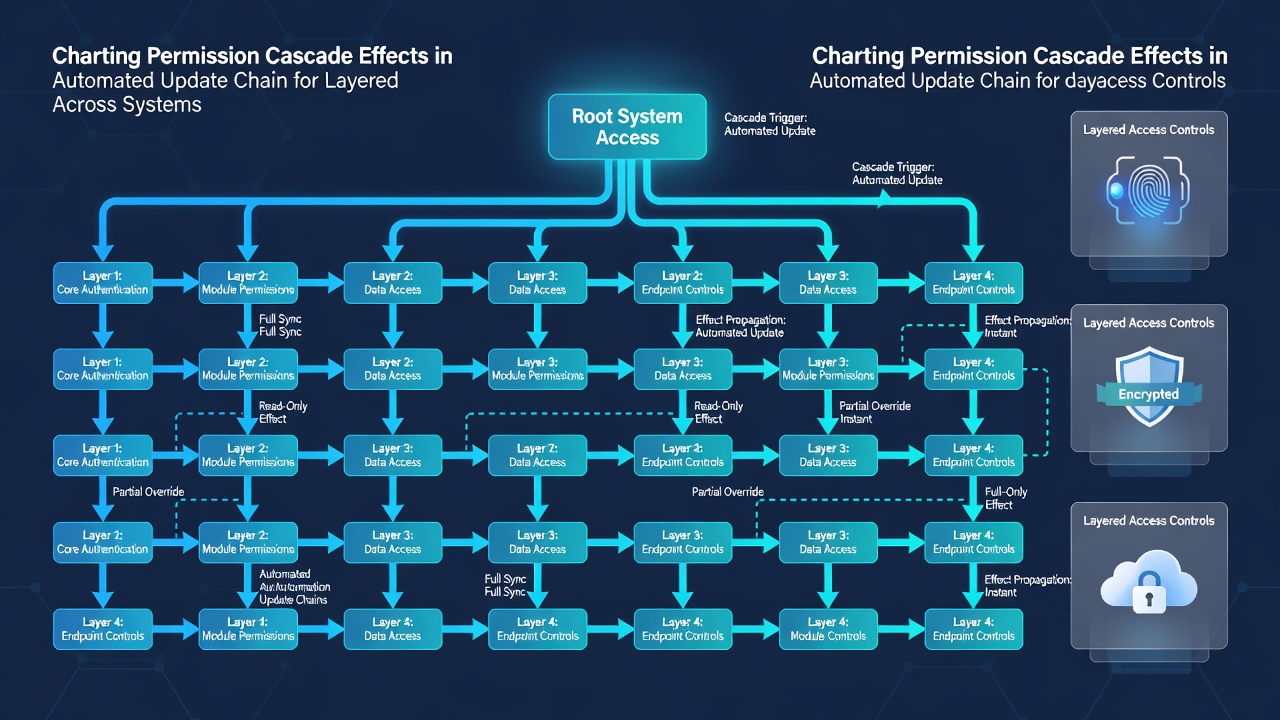
Visualization tools now help teams chart permission cascades by modeling update chains as directed graphs where each node represents a control layer and edges show dependency relationships. Data collected in June 2026 from enterprise networks showed that graph-based analysis identified 65 percent more potential cascade paths than traditional audit logs alone, allowing earlier intervention. Organizations integrate these tools with existing monitoring platforms so that permission changes trigger alerts before they reach production clusters.
Simulation environments replicate scattered device conditions to test update sequences in advance, and results from such tests guide the placement of checkpoints that halt propagation when unexpected permission shifts appear. European Union Agency for Cybersecurity reports emphasize the value of these simulations for critical infrastructure operators who manage clusters across multiple jurisdictions, since regulatory requirements often differ and affect how permissions must be preserved during updates. By running repeated scenarios, teams refine their chains to limit cascade scope while still delivering necessary patches on schedule.
Integration With Existing Security Frameworks
Permission cascade charting fits naturally into broader frameworks that already address access management and update verification, yet it adds a specific focus on dynamic effects across clusters. Analysts combine cascade mapping with zero-trust principles so that every permission change undergoes verification regardless of origin, which reduces the likelihood that an automated update will create unintended access paths. This integration requires consistent metadata standards so that devices in different clusters interpret permission states identically after each update cycle completes.
Academic studies from institutions such as the University of Waterloo have examined how machine learning models predict cascade behavior based on historical update patterns, and early findings suggest these models can flag high-risk sequences before deployment begins. Organizations that adopt such predictive methods report fewer incidents involving permission drift, although they still maintain human oversight for final approval of complex chains. The combination of automated charting and predictive analysis therefore supports more resilient layered controls across distributed environments.
Conclusion
Effective charting of permission cascade effects requires coordinated logging, dependency mapping, and simulation testing that together limit unintended changes during automated updates. Organizations continue to refine these practices as device clusters grow more numerous and geographically dispersed, drawing on frameworks from multiple regions to establish consistent controls. Continued attention to these dynamics helps maintain stable access policies while supporting the regular updates that modern hardware requires.