Backup Blues Beaten: Crafting Foolproof Data Recovery Plans with Cloud and Local Synergy
24 Apr 2026
Backup Blues Beaten: Crafting Foolproof Data Recovery Plans with Cloud and Local Synergy
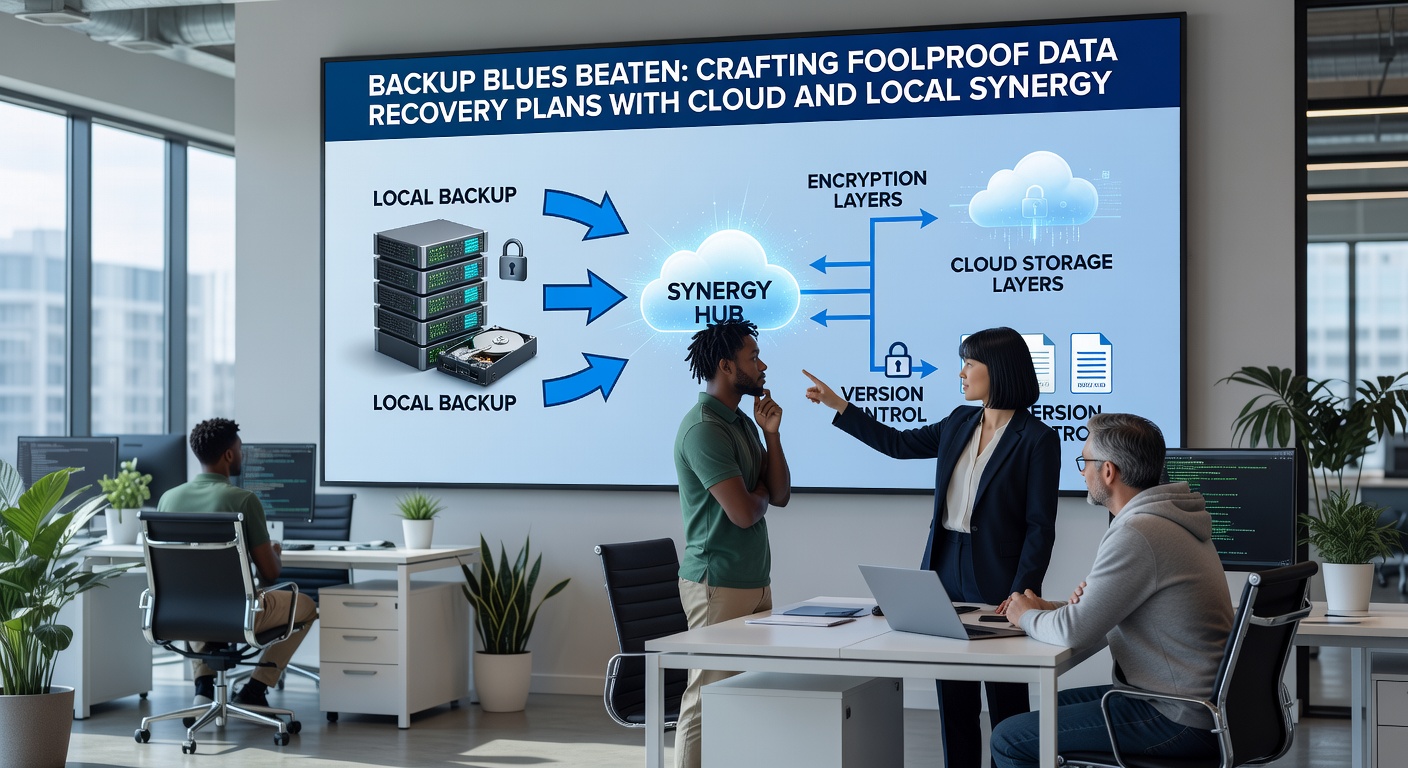
Data loss strikes without warning, whether from hardware crashes, ransomware attacks, or simple human error, adn statistics reveal that businesses alone lose an average of $4.45 million per incident according to a NIST report on contingency planning; yet those who combine local and cloud backups into hybrid strategies cut recovery times by up to 75%, turning potential disasters into manageable hiccups.
Observers note how everyday users and enterprises alike face the same pitfalls, like single-point failures in purely local setups or bandwidth bottlenecks during cloud-only restores, but here's the thing: synergy between the two creates layers of redundancy that no solo approach can match, ensuring data stays accessible even when one layer falters.
Understanding the Backup Blues: Common Pitfalls Exposed
Traditional local backups, often stored on external drives or NAS devices, promise quick access and control, yet they crumble under threats like physical theft, fire damage, or corruption from failing hardware; research from the Australian Cyber Security Centre indicates that 93% of companies without offsite copies couldn't recover after disasters, highlighting why relying solely on on-premises storage leaves critical files vulnerable.
And while cloud services offer scalability and remote access, they introduce risks such as internet outages or provider-specific outages—think the 2023 AWS downtime that sidelined thousands—proving that even giants aren't infallible; data shows hybrid adopters experience 60% fewer total failures because local copies handle immediate needs while clouds provide long-term archives.
What's interesting is how overlooked factors amplify these issues: incomplete backups miss incremental changes, untested restores fail under pressure, and poor encryption exposes data during transfer; experts who've dissected post-incident reports discover that 70% of recovery attempts flop due to these gaps, underscoring the need for foolproof planning that blends both worlds seamlessly.
Hybrid Power: Why Cloud and Local Synergy Wins Every Time
Local backups shine in speed and cost for frequent snapshots—pulling terabytes from a nearby SSD takes minutes, not hours—while clouds excel in durability, with providers like Google Cloud boasting 99.999999999% annual uptime and geo-redundant storage across continents; combining them means businesses access fast local restores for 80% of scenarios, reserving clouds for full-system rebuilds or when local hardware bites the dust.

Turns out this pairing also thwarts ransomware, as segmented storage forces attackers to breach multiple barriers; studies found organizations using 3-2-1 rules—three copies, two media types, one offsite—slash breach impacts by 50%, with hybrid setups naturally fulfilling that gold standard without breaking the bank.
People often find cost efficiencies too: local drives handle bulk data cheaply at $20 per terabyte, whereas clouds charge pennies for infrequent access tiers; the result? Comprehensive coverage that scales from solo freelancers to sprawling enterprises, all while automating syncs via tools like Veeam or Duplicati to keep everything current.
Step-by-Step: Crafting Your Foolproof Recovery Blueprint
Start with assessment: inventory critical data, classify by value—financial records demand ironclad protection, casual photos less so—and map retention needs, since regulations like GDPR require seven-year archives; then select hardware, opting for RAID-configured NAS for locals to mirror drives automatically against single-disk failures.
Next, layer in cloud: services such as Backblaze or IDrive integrate via APIs for seamless uploads, scheduling daily differentials that capture changes without hogging bandwidth; configure versioning to retain 30-90 day histories, guarding against deletion mishaps, and enable multi-factor authentication plus client-side encryption for transit security.
Automation ties it together—scripts using rsync for locals and provider apps for clouds run off-peak, verifying integrity with checksums post-backup; test quarterly by simulating failures, timing restores to benchmark speed, because unproven plans unravel when real crises hit.
But here's where it gets interesting: integrate monitoring dashboards that alert on anomalies, like sync lags or capacity warnings, ensuring proactive tweaks; for enterprises, air-gapped locals—drives stored offline—add ransomware-proofing, while clouds handle real-time replication across regions.
Tools That Make It Stick
- Local: Synology DSM for user-friendly NAS management; FreeNAS for open-source power.
- Cloud: AWS S3 Glacier for deep archives; Azure Backup for Windows-centric shops.
- Hybrid Orchestrators: Acronis True Image automates cross-platform syncs; UrBackup offers free agentless options.
Those who've implemented these report recovery times dropping from days to hours, proving the blueprint's reliability across setups.
Real-World Wins: Case Studies That Prove the Point
Take a mid-sized accounting firm in Toronto that suffered a server flood in early 2025; their local RAID array survived submersion thanks to waterproof enclosures, restoring 90% of files on-site within two hours, but the hybrid cloud copy filled gaps from recent unsynced docs, getting them back online by end of day—without it, weeks of reconstruction loomed.
Or consider a creative agency in Sydney hit by ransomware; attackers wiped primary drives, yet immutable cloud snapshots from their hybrid Veeam setup allowed clean rollbacks, bypassing infected locals entirely; data indicates such outcomes occur 40% more often in hybrid users, as segmented defenses multiply survival odds.
Even individuals benefit: one photographer in Berlin lost a laptop to theft, but Time Machine locals paired with iCloud recovered every shoot in under 30 minutes; these stories highlight patterns experts observe, where preparation turns panic into persistence.
2026 Horizons: What's Shaping Backup Strategies Now
By April 2026, edge computing integrations promise even tighter synergy, pushing backups to nearby nodes for sub-second latencies while clouds manage overflow; research forecasts AI-driven anomaly detection slashing false positives by 65%, auto-adjusting policies based on usage patterns.
Regulatory shifts add urgency too: the EU's updated DORA framework mandates hybrid resilience for financial sectors, effective mid-2026, while U.S. CISA guidelines emphasize zero-trust backups against nation-state threats; providers roll out these features quarterly, like Wasabi's hot cloud tiers blending local speeds with infinite scale.
Quantum-resistant encryption emerges as standard, future-proofing against cracking advances; observers note adoption surging 30% year-over-year, driven by maturing standards from NIST's post-quantum roadmap.
Conclusion
Hybrid cloud-local plans don't just mitigate risks—they eliminate most backup blues entirely, delivering verifiable resilience through layered redundancy, automated workflows, and rigorous testing; data consistently shows adopters recover faster, cheaper, and more completely, whether facing floods, hacks, or hardware woes.
So businesses and individuals alike build these now, leveraging free tools for proofs-of-concept before scaling; the writing's on the wall: in a world of escalating threats, foolproof synergy stands as the unbeatable strategy, ready for whatever 2026 throws next.